Calculator
Priming Sugar Calculator
Corn sugar, table sugar or dry malt extract, with residual CO2 taken from the beer temperature.
Use the WARMEST temperature the beer has reached since fermentation, not its current temperature. Beer holds less dissolved CO2 when warm, and using a cool current reading where the beer once sat warm is a common route to over-carbonation. Weigh the sugar. Measuring by volume is how a correct calculation becomes an incorrect batch.
The formula
Use the WARMEST temperature the beer has reached since fermentation, not its current temperature. Beer holds less dissolved CO2 when warm, and using a cool current reading where the beer once sat warm is a common route to over-carbonation. Weigh the sugar. Measuring by volume is how a correct calculation becomes an incorrect batch.
What rests on a standard and what rests on convention
- Standard The residual CO2 equation and the 15.195 g per gallon per volume figure.
- Convention The honey conversion factor is approximate.
A standard is a published equation, a published constant or a manufacturer specification. A convention is widely repeated brewing practice with no governing document behind it. Both are useful. Confusing one for the other is how a habit ends up being quoted as a fact.
Before you do this
Bottle conditioning stores real pressure inside glass. Prime only after gravity has been stable for several days, weigh the sugar rather than scooping it, and keep conditioning bottles in a closed box or crate so that a failure stays contained.
Bottling gear
This grid re-orders itself against the numbers you enter above. Prices are those returned when the page was built and change often.
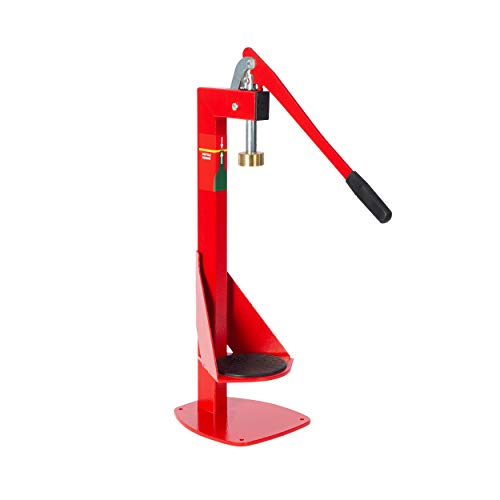
North Mountain Heavy Duty Bench Bottle Capper
All metal bench capper compatible with two cap sizes, which seats crowns consistently across a whole batch.
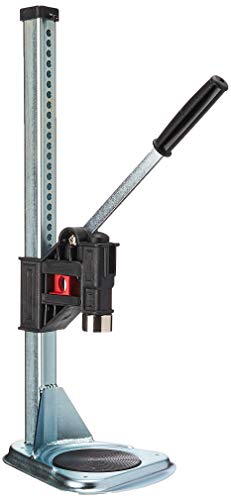
FastRack Colt Strong Bench Bottle Capper
Adjustable metal bench capper that handles both standard and Belgian bottles.
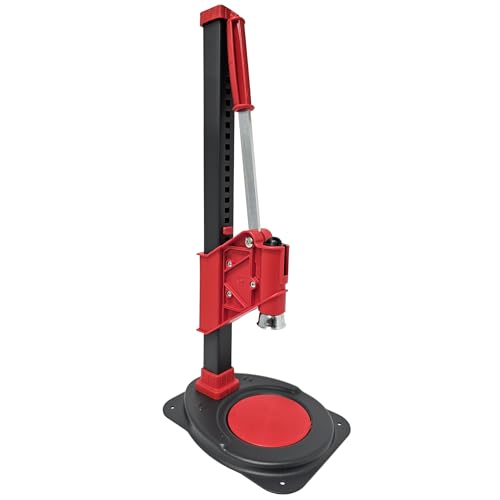
Ferrari Super Agata Bench Capper
Adjustable bench capper, a long standing homebrew standard.
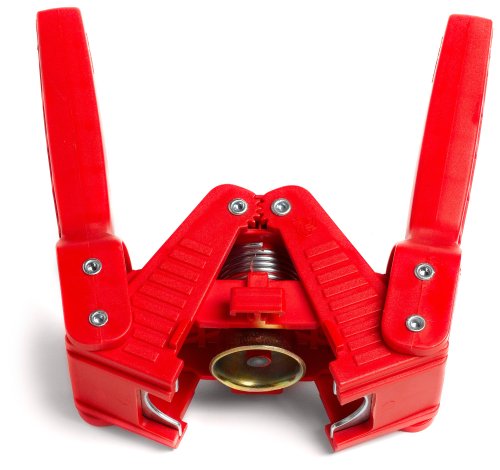
FastRack Red Baron Bottle Capper
Handheld two lever capper for 26mm crowns, the cheapest capper that works reliably.

North Mountain Hammer Bottle Capper
Simple hammer-style capper, slow but nearly indestructible.

FastRack Amber Beer Bottles 12 oz (24 pack)
Pry-off crown finish longneck amber bottles. Amber glass is what blocks the light that skunks hopped beer.

FastRack Amber Beer Bottles 12 oz (48 pack)
Forty eight amber longnecks, which is roughly what a five gallon batch fills.

FastRack Amber Beer Bottles 12 oz (96 pack)
Ninety six amber bottles, enough to keep two batches in glass at once.

North Mountain 12 oz Amber Bottles with Caps (24)
Case of amber longnecks supplied with 48 crown caps.

AOZITA 16 oz Swing Top Bottles (8 pack)
Flip top bottles that need no capper at all, though they must be checked for a sound gasket before every use.

YEBODA 16 oz Amber Swing Top Bottles (6 pack)
Amber flip top bottles, which combine no-capper convenience with light protection.

Fermtech ProFiller Bottling Wand
Spring tip bottling wand that fills from the bottom and stops when lifted, which keeps oxygen out.

Fermtech Spring Bottle Filler with Tubing
Spring bottle filler supplied with food safe NSF certified tubing.

Stainless Steel Spring Loaded Bottle Filler (14 inch)
Stainless bottling wand with NSF tubing and a cleaning brush, which tolerates hot cleaning.

Digital Pocket Scale 200 g x 0.01 g
Hundredth of a gram resolution, which is the precision hop additions and water salts actually need.

BOMATA 1 kg x 0.01 g Digital Scale
Wider range 0.01 g scale, which covers both salt additions and whole hop packets.

Bonvoisin Digital Lab Scale 600 g x 0.01 g
Laboratory balance with a draft shield style body, for brewers building water profiles by the tenth of a gram.
Related on BrewGearCalc
Frequently asked questions
- Why does beer temperature change the sugar needed?
- CO2 solubility falls as temperature rises, so warm beer has already lost more of the CO2 that fermentation produced. The calculator subtracts what is still dissolved from your target and primes only the difference. Using the fermentation temperature when the beer later sat somewhere warm understates the gap and under-carbonates the batch.
- What causes bottle bombs?
- Two things, and both are avoidable. The first is over-priming, usually from measuring sugar by volume instead of weight. The second is bottling before fermentation finished, so the remaining sugar keeps producing CO2 in the bottle. Confirm stable gravity across several days with a hydrometer, weigh the priming sugar, and store bottles somewhere a failure would not cause injury.
- Is corn sugar better than table sugar?
- Not in the finished beer. Both ferment cleanly at priming quantities and the difference is not detectable. What differs is the weight required, because table sugar carries slightly more fermentable material per gram, so you need about nine percent less of it. The calculator handles that conversion, so use whichever you have.
Researched from published brewing formulas, manufacturer specifications and verified owner reviews. This is general guidance, not professional advice.