Compare
Star San vs Iodophor
Star San, an acid-based no-rinse sanitiser sold here as Five Star Star San at $28.98 for 32 oz, is the sanitiser this catalog actually carries. Iodophor is a real, widely used iodine-based alternative, but no iodophor product is carried in this catalog, so Star San is the practical recommendation for a home brewer choosing between the two chemistries.
Both work on the same principle: a no-rinse contact sanitiser applied after cleaning, never as a substitute for cleaning itself.
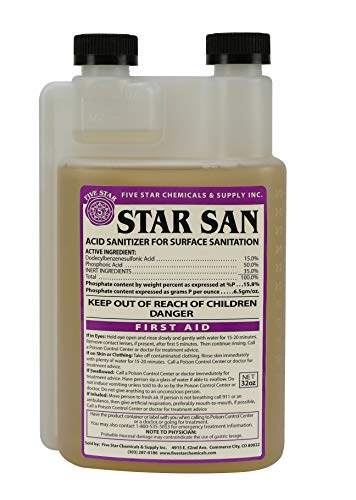
Five Star Star San (32 oz)
STAR SAN
It is a no-rinse acid sanitiser used across the home brewing hobby for years, and it is the sanitiser actually stocked in this catalog, since no iodophor product is carried here.
Price last checked at publication and changes often.
Two sanitising chemistries, one job
Star San and iodophor are both no-rinse sanitisers, meaning a properly diluted solution can be left on already-clean equipment and drained without a rinse step, since the residual amount left behind is small enough not to affect the beer. Where they differ is the active chemistry: Star San is acid-based, built around phosphoric acid and a foaming surfactant, while iodophor is iodine-based and does not foam the way Star San does.
Neither one is a cleaner. Both are sanitisers, meant to be the last step on a surface that has already had visible residue and organic film removed by an actual cleaning product first.
The genuine gap: this catalog does not carry an iodophor product
Iodophor is a legitimate, widely used sanitiser in home and commercial brewing, and plenty of brewers prefer it, particularly for its lack of foam and its usefulness for a quick visual check, since it stains a slightly amber color that fades as it dilutes below sanitising strength. That said, there is no iodophor product among the verified keys in this catalog. Rather than force a substitute forward as if it were the same thing, that gap is stated here directly.
For a brewer who specifically wants to use iodophor, sourcing it from a shop that carries it is the honest answer. Every recommendation on this page uses what this catalog actually stocks: Star San, and Five Star's Saniclean as a second, differently formulated no-rinse option.
How Star San actually works in practice
Star San is mixed to a low concentration in water according to the label, and a properly mixed solution foams noticeably when agitated, which some brewers find messy and others use as a visual confirmation that the mix is at working strength. It is applied by soaking, spraying, or swishing over a surface that has already been cleaned, and it is left to drain rather than rinsed off.
Saniclean, also from Five Star, is a differently formulated no-rinse sanitiser that does not foam the way Star San does and is marketed as gentler on stainless surfaces exposed to hard water minerals over repeated use. It is a reasonable alternative for a brewer bothered by Star San's foam, not a like-for-like substitute for iodophor's specific chemistry.
Sanitising is not cleaning, and applying it out of order does nothing
A sanitiser applied to a surface that is not already clean does not work. Organic residue, dried wort film, or visible grime shields microorganisms from a sanitiser's contact, so a fermenter that looks mostly clean but still has a film on it will not come out sanitised just because Star San or iodophor touched it. Cleaning removes the residue; sanitising then kills what is left on an already-visibly-clean surface.
Skipping straight to a sanitiser to save time is one of the more common contamination mistakes in home brewing, and it looks, from the outside, exactly like a sanitiser that simply failed.
Never mix an acid sanitiser with an alkaline cleaner
PBW and other alkaline cleaners are on the opposite end of the pH scale from an acid sanitiser like Star San, and mixing the two directly is a real safety hazard, not just a cleaning mistake. The reaction between a strong alkaline cleaner and an acid sanitiser can produce heat and irritating fumes, and either product on its own can already burn skin and eyes at working concentration.
Always rinse a cleaner completely off equipment with plain water before applying a sanitiser afterward, and never combine the two in the same bucket or spray bottle. Gloves and eye protection are worth using with either product at full concentration, not only when mixing.
Concentrate size and how much you actually need
Star San's concentrate keeps well sealed and unopened for a long stretch, since it is the mixed working solution that loses effectiveness fastest once diluted and left sitting for an extended period rather than used soon after mixing. A 32 oz bottle makes a large volume of working solution at the label's dilution rate, which is more than enough for most home brewers across many batches.
A full gallon of concentrate makes sense for someone sanitising a lot of equipment on a regular schedule, such as kegging gear, multiple carboys, and bottling equipment back to back. For someone sanitising a handful of items a few times a year, a gallon sitting mostly unused for a long stretch is money tied up in something a much smaller bottle already covers completely.
Where iodophor is commonly chosen over Star San
Brewers who dislike Star San's foam, or who want a sanitiser that gives a visual color cue at working strength, are the ones most likely to reach specifically for iodophor. Its amber tint fading as the solution weakens below sanitising strength is a genuinely useful visual check that Star San's clear, foaming solution does not offer in the same way.
Some brewers also cite staining on certain plastics as a downside of iodophor, a tradeoff against Star San's tendency to foam heavily when agitated. Neither downside is a safety issue on its own; they are workflow preferences that explain why some brewers have a strong opinion between the two chemistries even though this catalog only carries one of them.
Mixing and storing a working solution correctly
A working Star San solution is mixed fresh from concentrate according to the label's dilution rate, and it can be reused for a period after mixing as long as it still foams readily when agitated and its clarity has not visibly degraded. A solution that has gone cloudy or stopped foaming as expected is no longer reliable and should be remixed rather than trusted for one more use.
Storing mixed solution in a sealed, labeled container between uses, rather than in an open bucket exposed to airborne contamination, extends how long it stays usable and keeps it from being mistaken for plain water by anyone else using the same brewing space.
How the options compare
| Feature | Star San | Iodophor |
|---|---|---|
| Chemistry | Acid-based (phosphoric acid) | Iodine-based |
| Foams when agitated | Yes | No |
| Rinse required at label dilution | No | No |
| Visual color at working strength | Clear, foams white | Light amber, fades as it weakens |
| Carried in this catalog | Yes | No |
One-step sanitisers and where they fit
A one-step, no-rinse cleaner and sanitiser combination product, like FastRack's One Step, is marketed differently from both Star San and iodophor, positioned as a single product that handles light cleaning and sanitising together for equipment that is not heavily soiled. It is not a substitute for a real cleaner on genuinely dirty equipment with visible residue, since a sanitiser still cannot do a cleaner's job no matter how the product is marketed.
For equipment that already looks visibly clean between uses, such as a fermenter rinsed promptly after racking, a one-step product can simplify the routine to a single step rather than a full cleaning pass followed by a separate sanitising pass. It is worth treating as a light-duty option rather than a full replacement for PBW and Star San used in sequence on truly dirty gear.
How we chose
This recommendation comes from published label instructions on dilution and contact use, and from verified owner reviews describing foam behavior, hard water interaction, and general reliability across repeated batches. This is not the result of personal hands-on sanitising with these specific products. Where a chemistry class, like iodophor, is not represented by any real key in this catalog, that gap is stated plainly rather than papered over with an unrelated substitute.
The three tiers
These are three genuinely different builds, not the same product at three prices. Buy the tier that matches how much you already know you will use it.
Five Star Star San 16 oz (2 pack)
Five Star
Two 16 oz bottles at $39.95 make enough working solution for a new brewer's first several batches without committing to a full gallon of concentrate before knowing how often it will actually get used.
$39.95
View on AmazonFive Star Saniclean (32 oz)
Five Star
At $27.98 it is a genuinely different no-rinse chemistry from Star San, worth switching to for a brewer bothered by Star San's foam or dealing with hard water film on stainless surfaces.
$27.98
View on AmazonFive Star Star San (1 gallon)
Five Star Chemicals
At $99.00 a full gallon of concentrate covers frequent sanitising across kegging gear, multiple fermenters, and bottling equipment without remixing constantly. Someone sanitising a handful of items a few times a year should not buy this; a 32 oz bottle handles that pace for a fraction of the cost, and a gallon sitting mostly unused for a long stretch is money tied up for no real benefit.
$99.00
View on AmazonEverything else worth considering

FastRack One Step No Rinse Cleaner (1 lb)
Oxygen based no-rinse cleanser, a gentler alternative to caustic washes.

Star San 32 oz and PBW 1 lb Bundle
The cleaner and the sanitiser together, which is the pair every brewer needs and beginners often confuse.
Before you do this
PBW and other alkaline cleaners burn skin and eyes and must never be mixed with acid sanitisers such as Star San. Wear gloves and eye protection with either product at working concentration, and always rinse a cleaner completely off equipment before applying a sanitiser, since a sanitiser applied to a surface that is not already clean does not work.
Related on BrewGearCalc
Frequently asked questions
- Is iodophor better than Star San for home brewing?
- Both are legitimate no-rinse sanitisers built on different chemistries, and many brewers have a strong preference between them based on foam, smell, or hard water behavior. Neither is universally better. This catalog only carries Star San and Saniclean, so a brewer set on iodophor specifically will need to source it from a shop that stocks it.
- Does this catalog sell an iodophor sanitiser?
- No. Every sanitiser key verified in this catalog is either Star San or Saniclean, both from Five Star. There is no iodophor product carried here. This is a genuine gap rather than an oversight, and it is stated plainly so a brewer looking specifically for iodophor knows to look elsewhere rather than assume one of these products is equivalent.
- Can I mix Star San and PBW together in the same bucket?
- No, never. Star San is an acid sanitiser and PBW is an alkaline cleaner, and combining them directly can produce heat and irritating fumes, on top of the fact that either product alone can already burn skin and eyes at working concentration. Always rinse a cleaner completely off with plain water before applying a sanitiser afterward, and keep the two in separate containers.
- Why is my Star San solution foaming so much?
- Foaming when Star San is agitated, such as during spraying or swishing, is normal and expected behavior for its acid-based surfactant chemistry at proper working dilution. Some brewers use the foam as a rough visual sign the mix is still near working strength, though checking against the label's dilution instructions is more reliable than judging by foam alone.
- Do I need to rinse Star San off before brewing?
- No, that is the point of a no-rinse sanitiser used at its labeled dilution. The residual amount left on a surface after draining is small enough that it does not need to be rinsed away before contact with wort or beer. Rinsing it off with unsanitised water actually reintroduces contamination risk rather than reducing it.
- What's the real difference between Star San and Saniclean?
- Both are no-rinse sanitisers from Five Star, but Star San is acid-based and foams noticeably when agitated, while Saniclean uses a different formulation that does not foam and is marketed as gentler on stainless surfaces exposed to hard water minerals over repeated use. Neither is iodine-based, so neither is a true substitute for iodophor specifically.
Researched from published brewing formulas, manufacturer specifications and verified owner reviews. This is general guidance, not professional advice.