Charts
Hop Alpha Acid Chart
Alpha acid content typically runs from about 3 to 5 percent in noble aroma hops like Saaz up to 11 to 16 percent in high alpha bittering hops like Citra, Mosaic and the CTZ varieties, but the exact figure for any given lot is printed on the hop packet, and that lot-specific number is what belongs in an IBU calculation.
What alpha acid actually is
Alpha acids are the resin compounds in hops responsible for bitterness. During the boil, heat isomerizes alpha acids into iso-alpha acids, which are soluble in wort and give beer its bittering backbone. Aroma comes from a different part of the hop entirely, its essential oils, so a hop can be low in alpha acid and still carry enormous aroma, or high in alpha acid and mostly reserved for bittering additions where its oils will boil off before they matter.
Alpha acid content is reported as a percentage of the cone or pellet's weight, and it varies by variety, by growing region, by crop year, and even by the specific lot a hop merchant packaged. That is why every serious IBU calculation, including this site's IBU calculator, asks for an alpha acid percentage as an input rather than assuming a fixed number tied to a variety name.
Typical alpha acid ranges by variety
These ranges are typical published figures repeated across hop merchant catalogs and brewing references, useful for planning a recipe or comparing varieties at a glance. They are not a substitute for the number printed on the specific packet in front of you. A single variety's alpha acid can swing by several points between a wet growing season and a dry one, and a hop merchant's lot testing is the only number that reflects the hops actually in your kettle.
| Variety | Typical alpha acid range | Common role |
|---|---|---|
| Saaz | 3 to 4.5% | Noble aroma |
| Hallertau | 3.5 to 5.5% | Noble aroma |
| Fuggle | 4 to 5.5% | Aroma |
| East Kent Golding | 4 to 5.5% | Aroma |
| Willamette | 4 to 6% | Aroma |
| Cascade | 4.5 to 7% | Aroma / dual purpose |
| Amarillo | 8 to 11% | Dual purpose |
| Centennial | 9.5 to 11.5% | Dual purpose |
| Citra | 11 to 13% | Dual purpose |
| Mosaic | 11.5 to 13.5% | Dual purpose |
| Simcoe | 12 to 14% | Dual purpose |
| Chinook | 12 to 14% | Dual purpose / bittering |
| Magnum | 12 to 14% | Bittering |
| Nugget | 12 to 14% | Bittering |
| Galaxy | 13 to 15% | Dual purpose |
| Columbus / Tomahawk / Zeus (CTZ) | 14 to 16% | Bittering |
Why the range on this page is not the number to calculate with
Every hop package sold for home brewing carries a lot-specific alpha acid percentage, usually printed on the label or listed on the merchant's product page next to the harvest year. That figure, not the variety's typical range, is what belongs in an IBU calculation. Using the middle of a published range instead of the actual lot figure can shift a calculated IBU total by several units in either direction, especially for high alpha varieties where a two point swing in alpha acid translates into a proportionally large swing in bittering potential.
This matters most on bittering additions made early in the boil, where nearly all of the alpha acid isomerizes and contributes to measured IBUs. It matters far less on a late addition or a dry hop, where alpha acid percentage still describes the hop but contributes little to bitterness because there is little boil time left to isomerize it.
Grouping hops by alpha acid band
A hop's alpha acid band is a reasonable first filter when substituting one variety for another in a recipe, but it only tells part of the story. Two hops in the same band can taste completely different because of their oil profile, and swapping a citrus forward high alpha hop for a resinous one at the same alpha acid percentage hits the same measured IBU target while changing the beer's flavor entirely.
| Band | Alpha acid | Typical use |
|---|---|---|
| Low | under 5% | Noble and classic aroma hops, late additions, dry hopping |
| Medium | 5 to 10% | Flexible dual purpose additions |
| High | 10 to 15% | Dual purpose and bittering, common in modern hoppy styles |
| Very high | above 15% | Dedicated bittering additions, small doses go a long way |
Storage changes the number too
Alpha acid degrades in storage, faster at warm temperatures and faster once a package has been opened and exposed to oxygen. Hops kept sealed and frozen hold their alpha acid closest to the number on the packet for the longest time. A home brewer bittering with hops that have sat opened in a refrigerator for an extended period should expect measurably less bittering potential than the printed percentage promises, though exactly how much is lost depends on storage conditions this page cannot generalize into a single figure.
Buying hops closer to when you plan to brew, and keeping unopened portions sealed and frozen between uses, keeps the printed alpha acid figure meaningful for longer. A hop spider or fine mesh bag used at the boil does not change alpha acid content at all, it simply keeps hop matter out of the finished wort during transfer.
Alpha acid is only half of an IBU calculation
Alpha acid percentage tells an IBU calculation how much bittering potential a given weight of hops carries, but it is not the only variable that decides how much of that potential actually ends up in the finished beer. Utilization, the fraction of available alpha acid that actually isomerizes into the wort, rises with longer boil times and falls with higher wort gravity, since a denser wort resists isomerization more than a thin one does. Two additions with the exact same alpha acid percentage and the same weight can contribute noticeably different measured IBUs depending on when in the boil they went in and how strong the wort was at that point.
This is why an IBU calculator asks for boil time and batch gravity alongside alpha acid percentage and hop weight, rather than treating alpha acid as the whole story. A high alpha hop added at the very end of the boil, sometimes called a flameout or whirlpool addition, contributes aroma and flavor far more than bitterness, because there is little time left for isomerization no matter how much alpha acid the hop carries on paper.
Choosing hops by role, not just by number
A recipe's hop schedule usually assigns different varieties to different jobs: a higher alpha hop for the early bittering charge, where a smaller weight covers the target IBUs efficiently, and lower alpha, more aromatic varieties for late additions and dry hopping, where alpha acid barely matters and oil content and flavor carry the decision instead. Building a hop schedule around alpha acid bands first, then narrowing the choice within a band by flavor profile, is a practical way to work through the wide range of varieties available without needing to memorize every hop's specific character.
Home brew shops and hop merchants that sell pre-measured recipe kits, like the amber, cream ale and Mexican cerveza kits common in beginner starter sets, have already made these role decisions for the brewer, pairing a bittering hop and a finishing hop at quantities tuned to the kit's grain bill. Understanding the alpha acid logic behind those pairings makes it easier to substitute a hop that is in stock for one that is not, using the alpha acid bands on this page as the starting filter.
Everything else worth considering

Cascade Pellet Hops (1 lb)
A pound of Cascade pellets, the classic American aroma hop, which is far cheaper per ounce than small packets.

Centennial Hop Pellets (8 oz)
Half pound of Centennial, a dual purpose American hop.

BSG Mosaic Hop Pellets (8 oz)
Half pound of Mosaic, a high impact aroma hop for dry hopping.
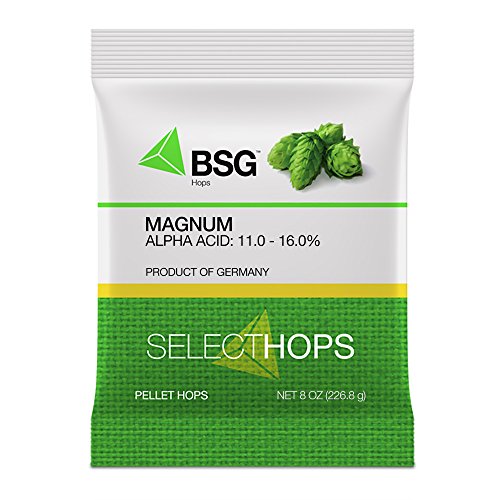
BSG Magnum Hop Pellets (8 oz)
High alpha bittering hop, which delivers a given IBU from a smaller weight of hops.

Citra Pellet Hops (1 oz)
Single ounce of Citra, the usual quantity for one late or dry hop addition.

YCH Citra Hop Pellets (1 lb)
A full pound of Citra for brewers dry hopping heavily and often.

TIZZE Hop Spider (300 micron)
Stainless mesh basket that keeps hop matter out of the wort, which makes transfer far cleaner.

Hop Hopper Spider Strainer Basket (6 x 14 inch)
Larger hop basket for heavily hopped ten gallon batches.
Related on BrewGearCalc
Frequently asked questions
- What is a good alpha acid percentage for bittering?
- There is no single correct number, but hops in the 10 to 16 percent alpha acid range are commonly chosen for bittering additions because a smaller weight of hops delivers the target IBUs, leaving more of the hop budget for late additions and dry hopping. Lower alpha hops work fine for bittering too, they simply require a larger dose to hit the same IBU target, which is a cost and logistics tradeoff rather than a quality one.
- Does a higher alpha acid hop always taste more bitter?
- Not directly. Alpha acid percentage describes bittering potential once isomerized during the boil, not perceived bitterness in the glass, which also depends on boil time, wort gravity, hop utilization and the beer's overall balance. A high alpha hop added late in the boil can contribute less measured bitterness than a low alpha hop boiled a full hour, because isomerization needs time as much as it needs alpha acid.
- Why do two packages of the same hop variety list different alpha acid numbers?
- Alpha acid content depends on the plant's growing conditions, harvest timing and storage, so it varies from crop year to crop year and even from lot to lot within the same year. A hop merchant tests each lot and prints that lot's actual figure, which is why a recipe written against one year's Cascade at 6 percent may need adjusting when replanted with a different year's Cascade at 5 percent.
- Can I substitute a hop with a similar alpha acid but a different variety?
- You can match the bittering contribution reasonably well by using the substitute's actual alpha acid percentage in an IBU calculation and adjusting the weight to hit the same target. What you cannot substitute is aroma and flavor, which come from the hop's oil profile and vary enormously between varieties that share a similar alpha acid range.
- Do pellet hops and whole cone hops have different alpha acid?
- The alpha acid percentage printed on the package reflects the hops as harvested and should be the same whether they were pressed into pellets or dried as whole cones, since pelletizing does not add or remove alpha acid. What differs between forms is utilization in the kettle, since pellets break apart and expose more surface area to the boil than whole cones do.
- Where do I find the alpha acid for the hops I actually bought?
- Check the package label first, since most home brew hop suppliers print the lot's tested alpha acid percentage directly on it. If it is missing, the merchant's product listing usually carries the same figure next to the harvest year. That lot-specific number, not a variety's typical published range, is the one to enter into an IBU calculation.
Researched from published brewing formulas, manufacturer specifications and verified owner reviews. This is general guidance, not professional advice.