Best Gear
Best Beer Faucets
The Kegland NukaTap Forward Sealing Faucet (nukatap) is the best beer faucet for most home kegerators at $36.70, sealing at the tap handle rather than staying wet inside the spout between pours.
Perlick faucets in this lineup run from $62.00 for the standard 630SS up to $82.24 for the flow-control 650SS, both stainless and both aimed at brewers pouring nitro or high-carbonation styles.

Kegland NukaTap Forward Sealing Faucet
Kegland
Its forward sealing design keeps beer out of the faucet body between pours at $36.70, cutting down on the mold and residue buildup a standard faucet is prone to, without paying for a Perlick flow control model.
Price last checked at publication and changes often.
Standard, forward-sealing and flow control: three different jobs
A beer faucet looks like a small, simple part of a kegging setup, but it is the last point of contact before beer reaches a glass, and the design differences between the options in this catalog affect both how often you clean it and how well it pours a specific style of beer. Picking a faucet based on price alone, without matching the design to how often the tap gets used and what style pours through it, is a common way to end up replacing it sooner than necessary.
A standard faucet, like the Kegco Standard Stainless Beer Faucet (kegco-faucet) at $31.57, opens and closes a simple valve at the bottom of the spout, and beer sits wet inside that spout between pours. That is fine for a beer poured often, but it means more surface area for mold and residue to build up if the faucet sits idle for stretches.
A forward-sealing faucet, the Kegland NukaTap (nukatap) at $36.70, moves the seal up to where the tap handle meets the body, so nothing sits wet in the spout between pours. It is a meaningful upgrade for a faucet that does not get poured through every day.
A flow control faucet, the Perlick 650SS (perlick-650ss) at $82.24, adds an adjustable restrictor so you can throttle the pour rate by hand at the faucet itself rather than only at the regulator. That matters most for nitro beers and highly carbonated styles that foam through a standard faucet, and it is unnecessary extra cost for a normally carbonated ale or lager.
How we chose
These picks come from published faucet type, material and thread specifications, plus verified owner reviews on how well a faucet resists sticking or dripping over time. We have not personally poured through every model side by side, and we are saying so directly.
We gave more weight to owner reviews describing a faucet after months of regular use than to reviews written right after unboxing, since a faucet’s real weak points, sticking valves, worn plating, seals that start to weep, tend to show up only after repeated cleaning cycles rather than on the first pour.
How the faucets compare
| Faucet | Type | Material | Price |
|---|---|---|---|
| Kegco Standard Stainless Beer Faucet | Standard | Stainless | $31.57 |
| Kegland NukaTap Forward Sealing Faucet | Forward sealing | Stainless | $36.70 |
| Perlick 630PC Draft Faucet | Standard | Chrome plated | $40.95 |
| Perlick 630SS Stainless Draft Faucet | Standard | Stainless | $62.00 |
| Perlick 650SS Flow Control Faucet | Flow control | Stainless | $82.24 |
Chrome plated versus stainless
The Perlick 630PC (perlick-630pc) at $40.95 is chrome plated rather than solid stainless, which keeps the price below its stainless sibling. Owner reviews on chrome plated faucets commonly note that the plating can pit or wear thin at contact points after years of cleaning cycles, while a solid stainless faucet like the Perlick 630SS (perlick-630ss) at $62.00 does not have plating to lose. That is a long-term durability trade rather than a difference in how either faucet pours on day one.
The price gap between the two is real but modest against the total cost of a kegerator setup, and most owners who plan to keep a system running for years find the stainless option the better long-term value even though the chrome plated version performs identically when new. A faucet used only occasionally, or on a system likely to be upgraded or replaced within a couple of years, is a reasonable place to save the difference with the chrome plated option instead.
Matching a faucet to your kegerator tower
A faucet threads into a shank on your kegerator tower or door, and most home kegerator towers use a common thread size, but it is worth confirming against your specific kegerator listing rather than assuming compatibility. See our kegerators guide if you have not chosen a cabinet yet, since the faucet is a separate purchase from the cabinet on nearly every listing in that lineup.
A conversion kit is a different case: most conversion kits already ship with a faucet included as part of the tower assembly, so check what is bundled before buying a faucet separately for a new conversion kit setup. If the included faucet is a basic standard design and you would rather start with forward-sealing from day one, swapping it for a NukaTap before first use is straightforward since the shank threading is the same either way.
Why faucet choice affects foam more than people expect
A faucet is the last restriction the beer passes through before it hits the glass, and a worn or poorly designed faucet can introduce turbulence that a perfectly balanced line and regulator cannot fix. A standard faucet with a rough or corroded internal bore, which is more common on lower-quality chrome plated designs as they age, can cause excess foaming even when line length and serving pressure are both correctly calculated.
This is part of why we separate faucet choice from the beer line kits guide rather than treating them as one purchase: a foaming problem traced back to the faucet is fixed by replacing the faucet, not by re-balancing the line, and troubleshooting the two as though they were the same part wastes time chasing the wrong fix.
A useful diagnostic step when a pour suddenly starts foaming is to pour directly from the disconnected beer line into a glass, bypassing the faucet entirely. If that pour comes out clean, the faucet is the likely cause; if it still foams, the problem sits further upstream in the line, pressure or carbonation rather than in the faucet itself.
Replacing a sticking or dripping faucet
A faucet that sticks partway open, drips steadily after the handle is closed, or feels gritty when the handle moves is usually past the point where cleaning alone fixes it. Internal parts on some faucet designs can be disassembled and replaced individually, but for the price difference involved, most owners find it simpler to replace the whole faucet rather than source small internal parts for an older unit.
Before replacing a faucet outright, rule out a simple cause: disconnect the beer line, flush the faucet with warm water and a brush, and check for anything lodged in the bore before assuming the faucet itself has failed. A faucet that has only recently started sticking after years of trouble-free use is more often a cleaning issue than a sign the part has worn out, and a thorough soak in cleaner before ordering a replacement is worth the few minutes it takes.
Keeping a faucet pouring clean
A faucet that pours slow, foams unexpectedly or tastes off before the keg itself is empty is usually a cleaning problem rather than a faucet defect. See our beer line kits guide for line replacement and our keg cleaning kits guide for the cleaning routine that keeps a faucet from becoming the source of an off flavor.
A forward-sealing faucet still needs to be disassembled and cleaned periodically even though it collects less residue between pours than a standard design. Skipping that step because forward-sealing sounds like it means less maintenance is a mistake, it means less frequent maintenance, not none at all.
Keep a spare o-ring or two on hand for whichever faucet you buy, since the small seals inside a faucet body are the parts most likely to need replacing over the years the faucet itself remains in service.
The three tiers
These are three genuinely different builds, not the same product at three prices. Buy the tier that matches how much you already know you will use it.
Kegco Standard Stainless Beer Faucet
Kegco
A standard stainless faucet at $31.57 pours a normal draft beer correctly and is the least expensive way to get a working tap. It is not forward-sealing, so it benefits from a bit more attention during cleaning.
$31.57
View on AmazonKegland NukaTap Forward Sealing Faucet
Kegland
At $36.70 the forward-sealing design reduces what sits wet inside the faucet after a pour, a worthwhile step up for most home kegerator owners.
$36.70
View on AmazonPerlick 650SS Flow Control Faucet
Perlick
A flow control faucet at $82.24 lets you throttle the pour rate by hand, which matters for nitro beers and highly carbonated styles that foam through a standard faucet. Skip it if you are pouring a normally carbonated ale or lager, a standard or forward-sealing faucet already pours those cleanly.
$82.24
View on AmazonEverything else worth considering

Perlick 630SS Stainless Draft Faucet
Forward sealing stainless faucet that does not stick shut between pours the way a rear sealing faucet can.
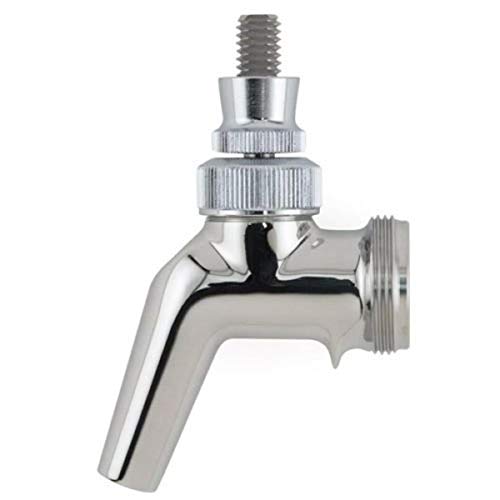
Perlick 630PC Draft Faucet (chrome plated)
The chrome plated version of the forward sealing Perlick, cheaper than stainless.
Before you do this
Faucet disassembly for a deep clean is often paired with a caustic cleaner like PBW. Wear gloves and eye protection when mixing or handling it, and never mix a caustic cleaner with an acid-based sanitiser.
Related on BrewGearCalc
Frequently asked questions
- What is a forward-sealing faucet and why does it matter?
- A forward-sealing faucet, like the Kegland NukaTap at $36.70, moves the shutoff point up to where the tap handle meets the faucet body instead of at the bottom of the spout. That keeps beer from sitting wet inside the spout between pours, which reduces the buildup of mold and residue that a standard faucet can develop when it is not poured through daily.
- Do I need a flow control faucet for a normal beer?
- No. A flow control faucet, like the Perlick 650SS at $82.24, adds an adjustable restrictor mainly useful for nitro beers or highly carbonated styles that foam excessively through a standard faucet. A normally carbonated ale or lager pours fine through a standard or forward-sealing faucet, so a flow control model is extra cost without a real benefit for those styles.
- What is the difference between the Perlick 630SS and 630PC?
- Both are standard Perlick faucets with the same body design, but the 630SS at $62.00 is solid stainless while the 630PC at $40.95 is chrome plated. The chrome plating keeps the price lower but can wear thin or pit at contact points after years of cleaning cycles, while the stainless version has no plating to lose over time.
- Will any faucet fit my kegerator’s tower?
- Most home kegerator towers use a common shank thread size, but it is not guaranteed across every brand and model, so confirm the thread specification on both your kegerator listing and the faucet listing before ordering. This matters most if you are replacing a faucet on an existing tower rather than buying a faucet as part of a new kegerator or conversion kit.
- How often should a beer faucet be cleaned?
- A faucet should be cleaned on the same schedule as the beer line it is attached to, since residue tends to build up in both places together. A forward-sealing faucet needs less frequent attention than a standard faucet because less beer sits wet inside it between pours, but neither design replaces a real line cleaning routine.
Researched from published brewing formulas, manufacturer specifications and verified owner reviews. This is general guidance, not professional advice.