Best Gear
Best Beer Line Kits
The Ball Lock Beer Line and CO2 Gas Line Kit (beerline-gas) is the best overall beer line kit for most home kegerators at $18.45, replacing both the beer line and the gas line in one order instead of two.
A simple 5 ft picnic tap line like the Ferroday 5 ft Ball Lock Beer Line with Picnic Tap (beerline-5ft) at $11.99 is the right choice if you only need a portable tap rather than a permanent faucet installation.
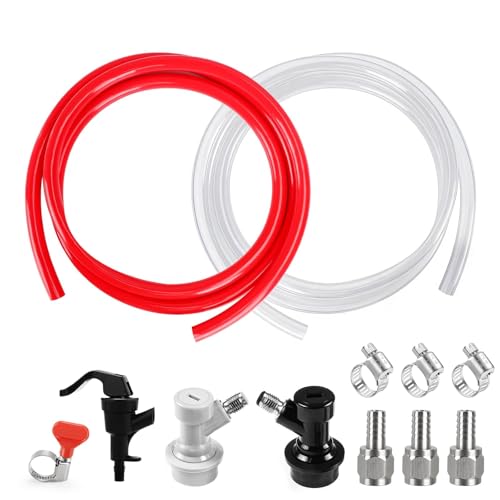
Ball Lock Beer Line and CO2 Gas Line Kit (5 ft each)
Hgkeke
At $18.45 it replaces both the beer line and the CO2 gas line together, matching the more common real repair since both lines age and pick up buildup on a similar schedule.
Price last checked at publication and changes often.
Beer line length is not one size fits all
Every beer line kit in this catalog uses 3/16 inch tubing sized for ball lock fittings, but that does not mean any length works the same in every setup. Line length and diameter together create resistance that a keg’s CO2 pressure has to push against, and the wrong combination is a common reason a beer pours mostly foam even when the carbonation level itself is correct.
A 5 ft line is a reasonable starting length for a typical home kegerator with a short run from keg to faucet, which is what each kit in this catalog ships as. If your setup runs a noticeably longer path from keg to tap, such as a kegerator with an external tower or a jockey box on a long hose, that longer run changes the resistance math and may call for a different length than these standard kits provide.
How we chose
These picks come from published tubing diameter, fitting type and included hardware, plus verified owner reviews on how well the included clamps and disconnects hold a seal under pressure. We have not personally pressure-tested these lines ourselves, and we are saying so directly.
We also looked for kits where the disconnects and clamps were described clearly enough to know exactly what would arrive, rather than vague listings that left fitting type ambiguous. A beer line kit is inexpensive enough that the real risk is not overpaying, it is ordering the wrong fitting type and having to reorder.
How the kits compare
| Kit | Includes | Tubing | Price |
|---|---|---|---|
| Ferroday 5 ft Ball Lock Beer Line with Picnic Tap | Beer line and picnic tap | 3/16 inch, ball lock | $11.99 |
| MRbrew 5 ft Ball Lock Beer Line Kit | Beer line only | 3/16 inch, ball lock | $11.99 |
| Ball Lock Beer Line and CO2 Gas Line Kit | Beer line and gas line | 5 ft each, ball lock | $18.45 |
Picnic tap or permanent faucet
The Ferroday kit (beerline-5ft) at $11.99 comes with a picnic tap already attached, which is a complete, portable serving solution with nothing else to buy. It suits a brewer who has not installed a permanent faucet yet, or who wants a portable line for taking a keg to an event. The MRbrew kit (beerline-mrbrew), also $11.99, is a bare line built for a permanent faucet installation instead, which is the right pick once you have a tower or door-mounted faucet like the ones on our beer faucets guide.
Buying the wrong one of these two kits for your situation usually shows up immediately: a bare line kit with no faucet leaves you with a dripping open tube, and a picnic tap kit installed permanently on a tower means holding a handheld tap awkwardly against a mounted spout instead of using a proper faucet handle. Confirm which kind of faucet setup you actually have, or plan to have, before ordering either one.
Why 3/16 inch is the standard diameter for ball lock lines
Every beer line kit in this catalog is 3/16 inch inner diameter, which is the tubing size that pairs with typical home serving pressures and short line runs to give a clean pour without excessive foam. A wider tubing diameter carries less resistance for a given length, which sounds appealing until you realize it also means a beer needs a lower serving pressure or a much longer line to pour without foaming, and a lower serving pressure can undercarbonate the beer sitting in the keg.
3/16 inch became the default in home kegging largely because it strikes a workable balance at the pressures and line lengths most home setups actually use. Departing from it is a legitimate choice for a jockey box or a long remote run, but it means recalculating the whole balance rather than simply swapping tubing sizes and expecting the same pour.
Whatever tubing material a specific listing uses, flexible beer line is a soft material relative to a stainless faucet or keg post, which is exactly why it is treated as a wear item to replace on a schedule rather than a permanent fixture. Check the individual listing for its stated material before ordering if that detail matters for your setup.
When to replace a beer line
Beer line tubing picks up yeast and hop residue on its interior surface over repeated pours, and that buildup is a common source of off flavors and stuck-on foam long before the tubing itself looks visibly dirty from the outside. There is no fixed replacement interval that applies to every setup: how often a line needs replacing depends on how frequently it is poured through and how consistently it gets cleaned between kegs, which is covered in our keg cleaning kits guide.
A line that has developed a persistent musty or sour off flavor that a cleaning cycle does not resolve has usually built up residue deep enough into the tubing wall that cleaning solution cannot fully reach it. At that point replacing the tubing outright, which costs under $20 for any kit in this lineup, is cheaper and more reliable than repeated attempts to clean a line that has already gone past the point cleaning can fix.
Picnic taps for events and remote pours
A picnic tap line is not only a stopgap before a permanent faucet installation, it is also the right permanent choice for anyone who regularly moves a keg to a different location to serve from, such as a tailgate, a backyard gathering or a friend’s house. The Ferroday kit (beerline-5ft) at $11.99 packages the picnic tap and line together specifically for that portable use case, with the tap itself easy to sanitize and store between uses.
A second, dedicated picnic tap line kept just for portable serving is a reasonable purchase even for a brewer who already has a permanent tower faucet at home, since it means never having to disassemble the home tap to take a keg somewhere else.
Balancing a draft system
Line length, tubing diameter and serving pressure work together to determine how a keg pours, and changing one without accounting for the others is why a system that poured cleanly at one setting can suddenly foam after a regulator adjustment. Our keg carbonation calculator and keg carbonation reference walk through the carbonation side of that relationship; the line itself is the other half of getting a clean pour.
If a pour foams excessively right after a beer line kit swap, check line length first before assuming the new kit is defective. A replacement line cut or coiled differently than the one it replaced, even at the same stated length, can behave differently enough to need a small adjustment to serving pressure to get back to a clean pour.
Changing more than one variable at a time, a new line, a new faucet and a new regulator setting all together, makes it hard to know which change actually fixed or caused a pour problem. Swap one part of the system at a time when troubleshooting, and give the new part a few pours before deciding whether it solved the issue.
Keeping a spare line kit on hand, rather than ordering one only after the current line has already started causing problems, means a bad pour never has to sit unresolved for the several days a new order can take to arrive.
The three tiers
These are three genuinely different builds, not the same product at three prices. Buy the tier that matches how much you already know you will use it.
Ferroday 5 ft Ball Lock Beer Line with Picnic Tap
Ferroday
At $11.99 it comes with a picnic tap already attached, working as a complete portable serving line with nothing else to buy, which suits a brewer who has not yet installed a permanent faucet.
$11.99
View on AmazonMRbrew 5 ft Ball Lock Beer Line Kit (3/16 inch)
MRbrew
Also $11.99, this kit is built as a bare 3/16 inch beer line for a permanent faucet installation rather than a picnic tap, the right pick once you have moved up to a real tower or shank.
$11.99
View on AmazonBall Lock Beer Line and CO2 Gas Line Kit (5 ft each)
Hgkeke
At $18.45 it replaces the gas line along with the beer line, worth doing when you are already disassembling a system for a deep clean or a full rebuild. Skip it if you only need to swap the beer line and your gas line is still in good shape, the cheaper single-line kits cover that job alone.
$18.45
View on AmazonRelated on BrewGearCalc
- Best beer faucets
- Best corny kegs
- Best kegerators
- Keg carbonation calculator
- Keg carbonation reference
Frequently asked questions
- What size beer line do these kits use?
- Every beer line kit in this catalog uses 3/16 inch tubing built for ball lock fittings, which is the common size for home kegerator setups running standard serving pressures. If you have a different fitting type or a longer run from keg to faucet than a typical home setup, confirm compatibility before ordering rather than assuming a standard 3/16 inch line will match your existing hardware.
- Do I need to replace the gas line, or just the beer line?
- Both lines age and pick up buildup on a similar schedule, so if you are already disassembling a system to replace one, it is often worth replacing both at once with a combined kit like the Ball Lock Beer Line and CO2 Gas Line Kit at $18.45. If only the beer line is showing problems and the gas side is still sealing well, a beer-line-only kit is a reasonable narrower fix.
- What is a picnic tap and when is it enough?
- A picnic tap is a simple handheld faucet attached directly to the end of a beer line, with no permanent mounting to a tower or door needed. It is enough for a brewer who has not installed a permanent faucet yet, or who wants a portable line for serving from a keg at an event, and the Ferroday kit at $11.99 ships with one already attached.
- How does beer line length affect my pour?
- Line length and tubing diameter together create resistance that the keg’s CO2 pressure has to push against on the way to the faucet, and the wrong combination is a common reason a beer pours mostly foam even when carbonation itself is correct. A short 5 ft line is a reasonable default for a typical kegerator, but a longer run from keg to tap changes that resistance math.
- How often should beer lines be replaced?
- There is no fixed schedule that applies to every setup: replacement frequency depends on how often the line is poured through and how consistently it gets cleaned between kegs. A line that develops off flavors, stuck-on foam or visible cloudiness inside the tubing well before it looks dirty from the outside is a sign it is due for replacement rather than another cleaning cycle.
Researched from published brewing formulas, manufacturer specifications and verified owner reviews. This is general guidance, not professional advice.