Compare
Conical vs Bucket Fermenter
For most five gallon batches, a plastic bucket like the FastRack 6.5 Gallon Fermenting Bucket at $31.95 ferments beer exactly as well as a stainless conical costing ten times more, because fermentation temperature and yeast health decide beer quality, not vessel shape.
A conical earns its price when you actually use the cone: harvesting yeast, dumping trub without opening the vessel, or racking beer through a bottom valve instead of siphoning from the top.

U.S. Solid 6.5 Gallon Fermenter with Airlock and Spigot
U.S. Solid
It ferments beer identically to a $900 stainless conical for a standard five gallon batch, and its built-in spigot gives you the one real convenience of a conical, easier racking, without the added cost or weight.
Price last checked at publication and changes often.
What actually decides fermenter shape
Fermentation quality comes down to temperature control, yeast health, sanitation and headspace, not the shape of the vessel underneath the airlock. A properly pitched, temperature controlled batch of beer will taste the same whether it fermented in a $32 plastic bucket or a $930 stainless conical. The vessel's job is to hold the beer, keep oxygen and contaminants out, and let carbon dioxide escape through an airlock. A bucket and a conical both do that job completely.
Where the two genuinely differ is in what happens after primary fermentation finishes: how you get the yeast out, how you rack clear beer off the trub, and how much of the vessel you have to open up and expose to air to do either one.
- Temperature control matters more than shape: a bucket in a temperature controlled space beats a conical in a hot garage.
- Headspace above the beer, not vessel material, is what prevents blow-off through the airlock.
- Sanitation practice, not price, is the biggest predictor of an infected batch.
What a conical fermenter actually buys you
A conical's cone bottom collects trub and spent yeast at a single low point, with a valve to drain it without opening the lid. That is the entire case for a conical: you can dump trub, harvest yeast for the next batch, or rack finished beer straight into a keg through a bottom valve, all without lifting the fermenter or breaking its seal. Stainless conicals in this catalog run from the Diboshi 20L at $119.00 up to the Diboshi 30.4 Gallon at $930.00, with capacity and build quality, not fermentation performance, explaining most of that gap.
Some conicals add features beyond the cone. The WELONSTAR Conical Fermenter with Cooling System, at $469.00, adds a jacket for running cold lager fermentation without a dedicated fermentation fridge. That is a real capability a plain bucket cannot match, and it is the kind of feature that justifies the premium for someone actually brewing lagers on a schedule.
What a bucket fermenter actually gives up
A bucket has no bottom valve. Racking beer off the trub means siphoning from the top with an auto siphon, which works fine but exposes the beer to slightly more handling than a bottom drain does. Harvesting yeast from a bucket means opening the lid and scooping it out, more exposure to open air and a higher infection risk than draining it from a sealed valve. For a homebrewer buying fresh yeast every batch, that difference never actually comes up.
Buckets are also opaque, so you cannot watch krausen rise the way you can through a glass carboy or a conical with a viewing window. That costs you visual feedback on fermentation progress, but a hydrometer reading or a wireless logger like the Tilt Pico gives you the same information without needing to see through the wall.
Headspace: the mistake that matters regardless of vessel
A five gallon batch wants roughly a 6.5 gallon fermenter, whichever shape you choose. Fill a fermenter too close to the rim and an active krausen has nowhere to go but up the airlock, which means cleanup and a brief loss of the CO2 blanket protecting the beer. The FastRack 6.5 Gallon Fermenting Bucket and the Diboshi 20L conical are both sized with this in mind; a plain five gallon vessel of either shape is not.
This headspace figure is a convention, not a published law: some vigorous ale yeasts throw enough krausen to fill a 6.5 gallon vessel from a five gallon batch, and a blow-off tube routed into a jar of sanitiser is the standard fix regardless of whether the fermenter is round bottomed or straight sided.
Cleaning a bucket versus cleaning a conical
A bucket is simple to clean precisely because it has nothing extra attached to it: pull the lid, scrub the inside with a bucket brush, rinse, sanitise, and you are done. There is no valve, no gasket around a drain fitting and no cone shaped bottom that collects residue in a corner a straight brush cannot reach.
A conical's drain valve is also the part most likely to need attention over time. Trub and hop matter can clog a valve if it is not flushed promptly after draining, and the gasket where the valve meets the cone is worth inspecting periodically for wear, since a leaking valve gasket is one of the more commonly reported conical fermenter complaints in owner reviews. None of this makes a conical hard to maintain, but it does add a maintenance step that a bucket simply does not have.
Failure modes worth knowing about
A plastic bucket lid relies on a rubber gasket pressed into a groove to seal against the rim, and repeated removal and reseating over many batches can leave that gasket compressed and less reliable, sometimes even warped if it was ever left in a hot car or a sun exposed garage. A lid that no longer seals tightly lets in the exact contaminants a fermenter is supposed to keep out, and a gap you cannot see is one of the more insidious causes of a mysteriously off batch. Inspect the gasket for flat spots or cracking each time you clean the lid, and retire a bucket outright once the gasket stops sitting flush.
A conical fails differently: the drain valve's gasket, not a lid gasket, is the wear point, and a valve that will not close fully drips trub-flavored liquid down the outside of the cone rather than letting in contamination. Neither failure mode is common with routine care, but knowing which part to actually inspect on each vessel saves you from a surprise mid-batch.
What this choice locks you into later
The choice also has a ceiling built into it. A bucket rated at 6.5 gallons cannot become an 8 gallon fermenter later, and neither can a 6 gallon conical; batch size growth eventually means buying a second, larger vessel regardless of which shape you started with. What does carry forward is the workflow: once you are used to draining trub and yeast through a valve, going back to siphoning from a bucket feels like a step backward, which is worth knowing before you build conical specific habits into how you brew.
The cost case over several years
Run the math over several seasons of brewing rather than one purchase. A FastRack 6.5 Gallon Fermenting Bucket at $31.95, replaced every few seasons as it scratches, still costs far less over five years than a single Diboshi 30.4 Gallon Stainless Conical Fermenter at $930.00, even accounting for the bucket needing occasional replacement.
Where the math flips is for a brewer harvesting yeast every single batch. Buying a fresh packet of dry yeast for every five gallon batch adds up over a dozen batches a year, and a brewer re-pitching harvested yeast from a conical's drain valve instead of buying new packets each time can offset a conical's added cost within a couple of seasons on yeast savings alone, on top of the convenience of not opening the lid to collect it.
How we chose
These picks come from published capacities, materials and valve configurations for each product, plus recurring patterns in verified owner reviews, not personal testing of every fermenter side by side.
Conical vs bucket fermenters compared
| Fermenter | Capacity | Price | Best for |
|---|---|---|---|
| FastRack 6.5 Gallon Fermenting Bucket | 6.5 gal | $31.95 | Standard five gallon batches, lowest cost |
| U.S. Solid 6.5 Gallon Fermenter with Airlock and Spigot | 6.5 gal | $47.57 | Bucket with a spigot for easier racking |
| Diboshi 20L Stainless Conical Fermenter | 5.3 gal | $119.00 | Entry level yeast harvesting and bottom draining |
| Fermtech 6 Gallon Conical Fermenter | 6 gal | $219.00 | Mid range conical for five gallon batches |
| WELONSTAR 17 Gallon Stainless Conical Fermenter | 17 gal | $389.00 | Scaling up to bigger batches with a cone |
| Diboshi 30.4 Gallon Stainless Conical Fermenter | 30.4 gal | $930.00 | High volume brewers who fill the cone routinely |
Who should buy which
Stay with a bucket for as long as it actually fits how you brew. Once you find yourself wanting to reuse a yeast slurry batch after batch, or wanting to drain trub without cracking the lid open, that is the specific moment a conical starts paying for itself rather than just costing more.
A brewer running one five gallon batch every so often has very little to gain from a conical no matter the price. A brewer running several batches back to back, harvesting yeast between them, gets real, repeatable value out of the cone.
There is also a practical middle path worth naming directly: a plastic bucket with a built-in spigot, like the U.S. Solid 6.5 Gallon Fermenter with Airlock and Spigot, gives you easier racking than a plain bucket without paying for stainless or a full cone. For a brewer who wants one specific conical convenience, easier racking, without the rest of the cost, that spigot is the cheapest way to get it.
The three tiers
These are three genuinely different builds, not the same product at three prices. Buy the tier that matches how much you already know you will use it.
FastRack 6.5 Gallon Fermenting Bucket with Lid
FastRack
The cheapest full setup for a first batch, at $31.95, with functionally identical fermentation to any conical for a standard ale. Step up only once you actually want to harvest yeast or drain trub without opening the lid.
$31.95
View on AmazonDiboshi 20L Stainless Conical Fermenter (316)
Diboshi
A real stainless conical at entry pricing, $119.00, sized close to a five gallon batch with the drain valve a bucket does not have.
$119.00
View on AmazonDiboshi 30.4 Gallon Stainless Conical Fermenter
Diboshi
30.4 gallons of stainless conical capacity at $930.00, for brewers running multiple batches or scaling well past five gallons at once. A brewer still doing single five gallon batches a few times a year should not buy this: the capacity and price go unused, and cleaning it is more work than a bucket ever was.
$930.00
View on AmazonEverything else worth considering
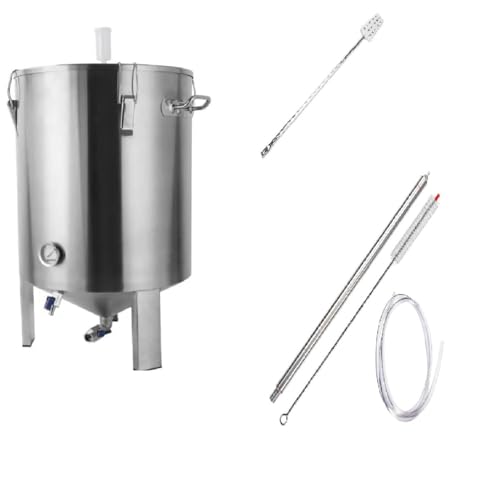
Fermtech 6 Gallon Conical Fermenter
Thirty litre 304 stainless conical supplied with a bottle filler and mash paddle.

WELONSTAR 17 Gallon Stainless Conical Fermenter
Wide mouth seventeen gallon stainless conical for beer and wine, with a dump valve for trub and yeast.

FastRack 6.5 Gallon Fermenting Buckets with Lids (2 pack)
Two BPA-free food grade HDPE buckets with drilled lids and airlocks, which covers primary and bottling in one purchase.

FastRack Fermentation Bucket with Spigot
Food grade bucket with a fitted spigot, which doubles as a bottling bucket.
Before you do this
A fermenter sealed with no working airlock or blow-off path, conical or bucket, has nowhere for fermentation CO2 to go and can build enough pressure to fail. Keep a filled, working airlock or blow-off tube in place from the moment you pitch yeast until fermentation is confirmed complete.
Related on BrewGearCalc
- Yeast pitch calculator
- Hydrometer correction calculator
- Stainless vs plastic fermenters
- Brewing guides
- Reference hub
Frequently asked questions
- Does a conical fermenter make better beer than a bucket fermenter?
- No. Beer quality comes from fermentation temperature, yeast health and sanitation, not vessel shape. A conical's cone bottom makes it easier to harvest yeast, dump trub and rack beer without opening the lid, which lowers infection risk during those specific steps, but it does not change how the yeast behaves during fermentation itself. A well managed batch in a bucket and a well managed batch in a conical taste the same.
- What size fermenter do I need for a five gallon batch?
- Plan for roughly 6.5 gallons of capacity for a standard five gallon batch, whether you choose a bucket or a conical. That headspace gives an active krausen room to rise without pushing beer up the airlock. Vigorous yeast strains can still fill a 6.5 gallon vessel, and a blow-off tube routed into a jar of sanitiser is the standard fix when that happens.
- Can I harvest yeast from a bucket fermenter?
- Yes, but you have to open the lid and scoop it from the trub layer, which exposes the yeast and the fermenter's interior to open air. A conical's bottom valve lets you drain yeast into a sanitised jar without opening anything at all. If you harvest yeast every batch, that convenience is the strongest real argument for paying more for a conical.
- Do I need a blow-off tube with a bucket fermenter?
- Only if the batch produces more krausen than the headspace can hold, which depends on the yeast strain and how vigorously it ferments, not on the vessel being a bucket. Watch the airlock in the first two to three days; if it starts pushing foam, swap the airlock for a length of tubing routed into a jar of sanitiser until activity settles down.
- Is a conical fermenter worth it for a beginner?
- Usually not. A beginner is still learning temperature control and sanitation, which decide beer quality far more than vessel shape does. A $32 bucket ferments a first batch just as well as a $930 conical. Buy a conical later, once you know whether you want to harvest yeast, keg directly off the cone, or brew batches large enough that the extra capacity earns its price.
- Why do conical fermenters cost so much more than buckets?
- Most of the price goes into stainless steel construction, the drain and racking valves at the bottom, and larger capacities, not into anything that changes fermentation chemistry. A cheap plastic bucket and an expensive stainless conical hold beer at the same temperature and let the same yeast do the same job. You are paying for convenience at the end of fermentation, not better beer during it.
Researched from published brewing formulas, manufacturer specifications and verified owner reviews. This is general guidance, not professional advice.