Guides
How to Build a Hop Schedule
A hop schedule lists what hop, how much, and when it goes into the boil, with an addition at the start of a 60 minute boil contributing the most bitterness, an addition around the 15 to 20 minute mark contributing more flavor, and anything added in the last 5 minutes, at flameout, or as a dry hop contributing mostly aroma with little measurable bitterness.
What a hop schedule actually controls
Hops contribute three broadly different things to finished beer, bitterness, flavor, and aroma, and timing is the main lever that decides which one dominates from a given addition. Bittering compounds in hops need sustained heat and time to isomerize into a soluble, bitter form, while the more delicate aromatic oils that create hop flavor and aroma boil off relatively quickly. A hop schedule is simply the plan for when each addition goes in to get the balance you want.
Bittering additions, early in the boil
Hops added at the start of a 60 minute boil, the CONVENTION boil length most recipes assume, get the longest exposure to sustained heat and convert the highest share of their alpha acids into bitterness. Because utilization is highest here, bittering additions are usually the most efficient place to use higher alpha acid hops, since you need less weight to hit a given bitterness target than you would with a late addition.
Flavor additions, mid boil
Additions added around the 15 to 20 minute mark get only partial utilization for bitterness, but retain noticeably more of the hop's own character than a full 60 minute addition does. This middle ground is where many recipes place hops chosen specifically for their flavor profile rather than pure bittering efficiency, balancing some bitterness contribution against real hop character coming through in the finished beer.
Aroma additions, late, whirlpool, and dry hop
Hops added in the final five minutes of the boil, at flameout, during a post-boil whirlpool while wort is still hot, or as a dry hop added directly to the fermenter, contribute mostly aroma with little to no measurable bitterness. The shorter or nonexistent exposure to boiling temperature preserves the volatile aromatic compounds that a long boil would otherwise drive off.
Dry hopping in particular adds no bitterness at all, since there is no boiling involved, and the exact timing relative to fermentation, whether during active fermentation or after it finishes, comes down to brewer preference and style tradition rather than a single settled standard.
Calculating bitterness: Tinseth and Rager disagree
Two published equations, Tinseth and Rager, are both widely used to estimate IBU from a hop schedule, and they are both STANDARD published formulas, not guesses. They also disagree with each other on the same recipe, with Rager generally producing a higher calculated number than Tinseth for the same hop bill and boil time. Neither one is the objectively true bitterness value, because a calculated IBU number is a model built from alpha acid weight, boil time, and gravity, not a direct measurement of the finished beer.
Perceived bitterness in the glass also depends on factors the calculation does not capture, like malt sweetness balancing it out. Use the IBU calculator linked below to compare a recipe against a target range, but treat the resulting number as an estimate to plan around, not a lab measurement.
| Addition time | Common name | Primary effect | Utilization |
|---|---|---|---|
| 60 minutes, start of boil | Bittering charge | Bitterness | Highest, full boil time |
| 15 to 20 minutes | Flavor charge | Balanced bitterness and flavor | Partial |
| 5 minutes or flameout | Aroma charge | Aroma, little bitterness | Low |
| Whirlpool, after flameout while hot | Whirlpool hops | Aroma and some flavor | Low, temperature and time dependent |
| Dry hop, during or after fermentation | Dry hop | Aroma only | None, no boiling involved |
Hop form: pellets versus whole cone
Most homebrew hops are sold as pellets, which are ground and compressed hop cones. Pellets break apart in the kettle, which increases surface area contact with the wort and makes straining necessary, typically with a hop spider, a mesh bag, or a whirlpool arm on a system that has one. Whole cone hops stay intact and are easier to strain out, since the cone itself acts as a rough filter bed, but they are less commonly stocked at homebrew shops than pellets.
The choice between the two affects how you manage the boil more than it changes the fundamentals of a hop schedule. Bittering, flavor, and aroma timing work the same way regardless of hop form, and both Tinseth and Rager treat alpha acid weight the same either way, so pick whichever form your supplier stocks reliably and plan your straining method around it.
Alpha acid variability from crop to crop
Alpha acid percentage for a given hop variety is not a fixed number. It varies from harvest to harvest and even from lot to lot depending on growing conditions, which is why a package of hops lists its own specific alpha acid percentage rather than a single figure for the variety as a whole. A recipe written using an assumed alpha acid percentage from one source can produce a noticeably different calculated IBU if the hops you actually buy carry a different number.
Always plug the alpha acid percentage printed on your actual hop package into the IBU calculator rather than relying on a generic figure from a recipe you found online. This single habit closes more of the gap between a calculated IBU target and what a recipe was originally designed around than adjusting boil time or hop weight after the fact.
Substituting one hop variety for another
A hop schedule built around one variety can often be adapted to a different variety you have on hand, but the substitution works better for bittering additions than for flavor or aroma ones. Since bittering is driven mainly by alpha acid weight, a higher alpha variety used in smaller weight can hit the same calculated IBU as a lower alpha variety used at a larger weight, and the flavor difference matters less this early in the boil.
Late additions are a different story, since flavor and aroma hops are chosen specifically for the character they contribute, not just their alpha acid number. Swapping a citrus-forward variety for an earthy or resinous one at the aroma stage changes the finished beer's character even if the calculated IBU contribution stays roughly the same, so substitutions here are a flavor decision more than a math one.
Recording your schedule for next time
A hop schedule is worth writing down exactly as brewed, including the actual alpha acid percentage used, the real boil time each addition sat in the kettle, and any deviation from the original plan such as a late addition that went in a few minutes off schedule. Recipe software will happily recalculate an estimated IBU from a plan, but only your own notes capture what actually happened in the kettle.
Over several batches, comparing your notes against your tasting impressions builds a much better sense of how a given schedule translates into perceived bitterness and hop character on your specific system than any single calculator run ever will, since your palate and your equipment are the two variables no published equation accounts for.
Building your own schedule
Start from a target IBU range for your style and work backward using the IBU calculator to size your bittering addition. From there, allocate the remaining hops in your recipe between flavor and aroma timing based on how much hop character you want coming through versus how clean and malt-forward you want the finished beer. A hop spider or mesh bag makes removing spent hops after the boil easier, especially with pellet hops that break apart.
Because calculated IBU is a model and not a measurement, it is worth recording the actual hop weights and timings you use for a batch and comparing your impression of the finished beer's bitterness against the calculator's number over several batches. That builds a feel for how the model relates to your own palate and system, which is more useful long term than treating any single calculated number as exact.
Everything else worth considering

Citra Pellet Hops (1 oz)
Single ounce of Citra, the usual quantity for one late or dry hop addition.

Cascade Pellet Hops (1 lb)
A pound of Cascade pellets, the classic American aroma hop, which is far cheaper per ounce than small packets.

BSG Mosaic Hop Pellets (8 oz)
Half pound of Mosaic, a high impact aroma hop for dry hopping.
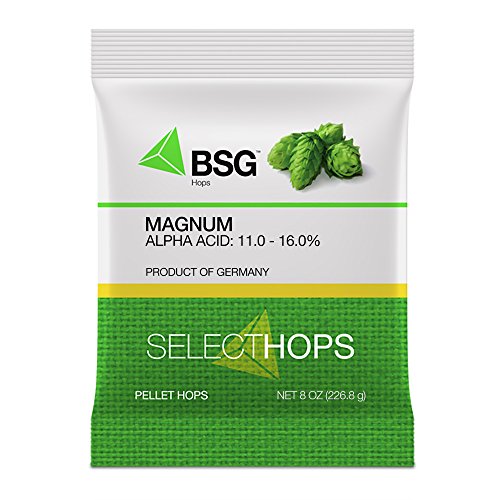
BSG Magnum Hop Pellets (8 oz)
High alpha bittering hop, which delivers a given IBU from a smaller weight of hops.

Centennial Hop Pellets (8 oz)
Half pound of Centennial, a dual purpose American hop.

TIZZE Hop Spider (300 micron)
Stainless mesh basket that keeps hop matter out of the wort, which makes transfer far cleaner.

Hop Hopper Spider Strainer Basket (6 x 14 inch)
Larger hop basket for heavily hopped ten gallon batches.

Digital Pocket Scale 200 g x 0.01 g
Hundredth of a gram resolution, which is the precision hop additions and water salts actually need.
Related on BrewGearCalc
Frequently asked questions
- What's the difference between bittering, flavor, and aroma hop additions?
- The difference comes down to timing and how much heat exposure the hops get. Bittering additions go in early, often at the start of a 60 minute boil, and convert the most alpha acid into bitterness. Flavor additions go in mid boil, around 15 to 20 minutes, for a mix of bitterness and character. Aroma additions go in late, at flameout, in a whirlpool, or as a dry hop, contributing smell and taste with little to no bitterness.
- Why do Tinseth and Rager give different IBU numbers for the same recipe?
- Both are legitimate published equations for estimating hop utilization, but they model the relationship between boil time, wort gravity, and alpha acid conversion differently, and Rager generally produces a higher number than Tinseth for the same schedule. Neither is more correct than the other, since calculated IBU is a model, not a direct measurement of the finished beer.
- Does dry hopping add any bitterness?
- No. Dry hopping adds hops directly to the fermenter with no boiling involved, so there is no heat-driven isomerization of alpha acids into bitter compounds. Dry hops contribute aroma and some flavor from the hop oils that dissolve into the beer at fermentation or cellar temperature, but they do not raise the calculated or perceived bitterness of a batch.
- What time should I add my bittering hops?
- Most recipes add the bittering charge at the very start of the boil, giving it the full boil length, commonly 60 minutes, to isomerize alpha acids into bitterness. This is the point of highest utilization, so it is also the most efficient time to use a smaller weight of a higher alpha acid hop variety to hit a bitterness target.
- Do whirlpool hop additions add much bitterness?
- Generally not much. Whirlpool additions go in after the active boil ends, while the wort is still hot, so there is some heat exposure and some utilization, but far less than a full boil-length addition gets. Whirlpool hops are used mainly for the flavor and aroma they contribute rather than as a meaningful bitterness source.
- How accurate is a calculated IBU number?
- It should be treated as a planning estimate rather than a measured fact. Tinseth and Rager are both published equations, they disagree with each other on identical recipes, and perceived bitterness in the glass also depends on factors like malt sweetness that the calculation does not account for. Use a calculated IBU to compare recipes against each other and against a style range, not as an exact lab value.
Researched from published brewing formulas, manufacturer specifications and verified owner reviews. This is general guidance, not professional advice.