Guides
How Much Yeast to Pitch
Home brewers commonly target about 0.75 million yeast cells per milliliter of wort per degree Plato for ales, and roughly double that, near 1.5 million, for lagers; these are widely repeated pitching-rate conventions, not manufacturer specifications.
At that ale rate, a typical 5-gallon batch at 1.050 original gravity needs on the order of 175 billion cells, more than the roughly 100 billion cells a single fresh liquid yeast pack ships with by manufacturer specification.
Where the pitch rate numbers come from
The 0.75 million cells per milliliter per degree Plato figure for ales, and the doubled rate commonly used for lagers, show up in nearly every brewing book and pitch calculator. They are useful and they work, but no yeast lab, standards body or manufacturer publishes them as a specification. They are a convention: a widely repeated shop habit that home brewers converged on because it produces clean, reliable fermentations across most normal-gravity beers.
That is different from the cell counts printed on yeast packaging. A liquid yeast pack is sold as approximately 100 billion cells, and dry yeast is commonly specified at a minimum of 6 billion viable cells per gram, which puts an 11.5 gram sachet at roughly 69 billion cells. Those numbers come from the manufacturer, not from a rule of thumb, and they are the real inputs the pitch-rate convention gets applied to.
Ale rate versus lager rate
Lagers ferment colder than ales, often in the same range where yeast reproduces more slowly, so the convention calls for roughly double the cell count going in to compensate. Pitching a lager at an ale-sized rate is one of the more common causes of a slow, sluggish lager fermentation that never quite gets going the way it should.
The table below works through one example using the convention numbers above, for a 5-gallon batch at 1.050 original gravity. Treat it as an illustration of how the formula behaves, not a substitute for running your own batch size and gravity through a calculator.
| Style | Convention rate | Approximate cells needed |
|---|---|---|
| Ale | 0.75 million cells/mL/°P | about 175 billion cells |
| Lager | 1.5 million cells/mL/°P | about 350 billion cells |
Why one liquid pack often falls short
Set next to the numbers above, a single fresh liquid pack at roughly 100 billion cells covers less than the convention target for a 5-gallon ale at 1.050, and well under half of what the doubled lager convention calls for. That gap is exactly why liquid yeast so often gets built up in a starter before brew day rather than pitched straight from the pack, especially for anything above a fairly light beer.
The alternative to a starter is simply buying more than one pack, which some brewers do for lagers or big beers where growing a large enough starter would take multiple stepped stages. Either approach works. What does not work reliably is treating a single fresh pack as adequate for every gravity and every style without checking the math first.
Dry yeast plays by different math
Dry yeast needs no starter for ordinary strength ales, because a sachet already carries enough cells to pitch directly. That statement sits a little oddly next to the convention numbers above, since roughly 69 billion cells in an 11.5 gram sachet is still under the naive 175 billion target for a 5-gallon ale at 1.050, but manufacturer pitching guidance for dry yeast generally treats one sachet as sufficient for a standard-gravity batch anyway.
The reason is how dry yeast is produced. It is manufactured and packaged specifically to be pitched directly, with cells that are well conditioned for that purpose, rather than cells pulled from active liquid propagation. For anything meaningfully above ordinary strength, the usual adjustment is a second sachet or a larger rehydration volume, not a wort-based starter.
What viability decline does to the math
A liquid yeast pack loses viable cells over time even under refrigeration, and a commonly used estimate puts that decline at roughly a fifth of the pack per month. That number is a convention and an estimate, not a manufacturer specification, and actual decline varies with storage temperature and the individual pack. It is still useful for one purpose: a pack that has been sitting for a while needs a bigger starter, or a second pack, to reach the same effective cell count as a fresh one.
Checking the production date printed on the pack before deciding on starter size is a simple habit that avoids a common source of underpitched, sluggish fermentations, particularly with packs bought from a shop that does not turn over stock quickly.
A visual check before pitching
Some liquid yeast formats build in a rough freshness check. A Wyeast smack pack contains an inner nutrient pouch that, once broken, feeds the yeast and causes the whole pack to swell with carbon dioxide over a few hours if the culture is still viable. A pack that never swells at all is a warning sign worth taking seriously, though a slow or partial swell does not necessarily mean the pack is dead, just older or less vigorous than a pack that swells quickly.
White Labs vials and other pre-mixed liquid formats do not have the same built-in test, since they are already in liquid suspension rather than a dry nutrient pouch waiting to be activated. For those, checking the production date on the label remains the more reliable freshness check.
Rehydrating dry yeast the right way
Sprinkling dry yeast directly onto cooled wort works and plenty of brewers do it, but manufacturers generally recommend rehydrating it first in plain water at the temperature printed on the packet, then letting it sit for a set number of minutes before pitching. Rehydrating in water rather than wort gives the dried cells a gentler start, since they are not immediately faced with a strong sugar solution while they are rebuilding their cell membranes.
Skipping rehydration is not usually catastrophic for an ordinary ale, but it can lower the effective viability of the pitch compared with what the sachet is capable of, which matters more the closer the batch sits to the edge of what one sachet can cover.
Repitching yeast slurry from a previous batch
Harvesting the yeast cake or slurry left behind after racking a finished batch is a common way to reuse a strain without buying a new pack every brew day. The slurry from the bottom of a fermenter holds a large population, generally far more than a single fresh pack, so a portion of it, rather than the whole cake, is usually enough to pitch a new batch at a healthy rate.
Exactly how much slurry to use depends on how concentrated it is, which varies from batch to batch and is hard to know precisely without a microscope and a counting chamber, so most home brewers work from experience and visual judgment rather than a fixed number. Repitched yeast should also be used within a reasonable window and kept cold and covered between batches, since it declines in health the longer it sits.
Using a calculator instead of eyeballing it
The example above only covers one gravity and one batch size. Real recipes range from light session beers to big, thick barleywines, and the correct pitch target moves with every change in volume and gravity. A yeast pitch calculator takes those specifics, applies the ale or lager convention, and returns both a target cell count and a starter size, which is a more reliable way to plan a pitch than trying to hold the math in your head on brew day.
Everything else worth considering
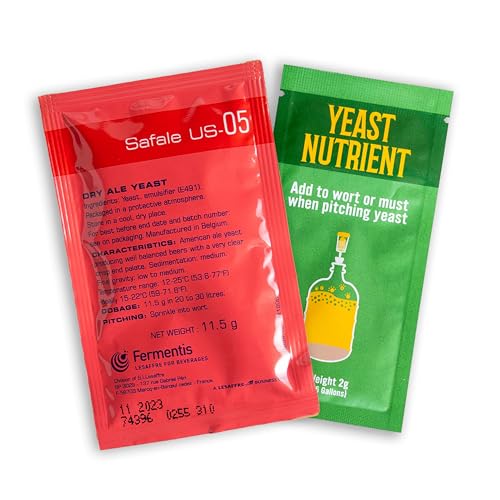
Safale US-05 American Ale Dry Yeast
The default clean American ale strain. Dry yeast needs no starter, which removes a whole step for a first all-grain batch.

Safale S-04 English Ale Dry Yeast
Fast flocculating English ale strain that drops bright quickly.

Fermentis Safale US-05 (8 pack, 11.5 g)
Eight sachets of US-05, which is the cheapest way to pitch properly on every batch.

LalBrew Nottingham Dry Ale Yeast (2 pack)
Neutral high attenuating ale yeast in 11 g sachets.

LalBrew Voss Kveik Ale Yeast (2 pack)
Kveik strain that ferments cleanly at high temperatures, which removes the need for a fermentation chamber in a warm house.

LalBrew New England Ale Yeast (2 pack)
Hazy ale strain for New England style IPAs.
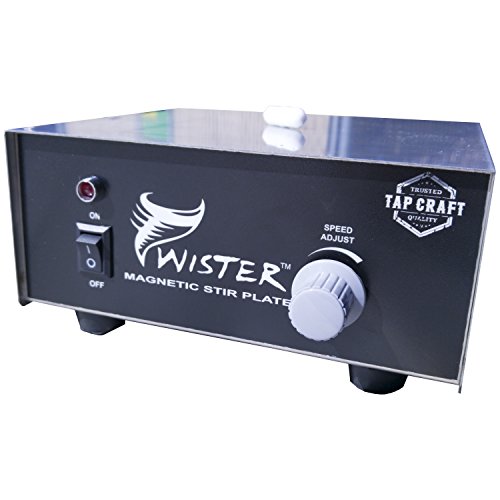
Tapcraft Twister Stainless Magnetic Stir Plate
Seven inch stainless stir plate sized for a two litre starter flask.

JOANLAB MS5 Magnetic Stirrer
Entry level unheated magnetic stirrer for yeast starters.
Related on BrewGearCalc
- Yeast pitch rate calculator
- Yeast pitch reference
- How to make a yeast starter
- Fermentation temperature control
Frequently asked questions
- What happens if I pitch too little yeast?
- Underpitching stresses the yeast that is present, since a smaller population has to reproduce more before it can finish the job. That stress commonly shows up as a longer lag before visible fermentation starts, more fusel alcohol and sometimes more esters than the strain would normally produce, and a longer window where the beer sits vulnerable to contamination before the yeast takes hold. It does not always ruin the batch, but it is one of the more common causes of an off, hot, or solventy homebrew.
- What happens if I pitch too much yeast?
- Overpitching tends to produce a fast, clean, but sometimes thinner fermentation, since a very large population burns through the available sugar quickly with less individual cell stress. Some brewers report that overpitched ester-driven ale styles taste a little flatter or less characterful than the same recipe pitched at a normal rate, though it rarely causes the kind of clear flaws that underpitching does. It is a smaller risk to lean toward than pitching too little.
- Do lagers really need double the yeast?
- Doubling the ale pitch rate for lagers is a widely followed home-brewing convention, not a number set by any yeast manufacturer, but the reasoning behind it holds up: lager yeast ferments at colder temperatures where reproduction is slower, so starting with more cells compensates for that slower growth and helps avoid a sluggish, stalled-feeling fermentation. Pitching a lager at an ale-sized rate is a common cause of lagers that seem to take forever to get going.
- Is one packet of dry yeast enough for 5 gallons?
- For an ordinary-strength ale, generally yes. Dry yeast is manufactured and packaged to be pitched directly, and manufacturer guidance treats one 11.5 gram sachet, roughly 69 billion cells, as enough for a standard 5-gallon batch without a starter. For a bigger or higher-gravity beer, the usual fix is a second sachet or a larger rehydration volume rather than growing the yeast in a wort-based starter.
- Does yeast lose potency sitting in the fridge?
- Liquid yeast viability declines over time even refrigerated, and a commonly used estimate puts that decline at roughly a fifth of the pack per month, though this is an estimate rather than a manufacturer specification and it varies with storage conditions. A pack that has been sitting a while effectively has fewer usable cells than the number printed on the label, which is a good reason to check the production date and size a starter accordingly.
- Should I always use a calculator instead of a rule of thumb?
- The 0.75 million cells per milliliter per degree Plato rule of thumb is a reasonable starting point, but it is a flat convention that does not automatically scale to your specific batch volume, gravity, or yeast format. A pitch rate calculator applies that same convention with your real numbers plugged in and returns a specific cell target and starter size, which is more reliable than doing the arithmetic by hand on brew day.
Researched from published brewing formulas, manufacturer specifications and verified owner reviews. This is general guidance, not professional advice.