Guides
How to Control Fermentation Temperature
Active fermentation is exothermic, and the beer itself commonly runs 5 to 10 degrees Fahrenheit warmer than the surrounding air while the yeast is working hardest, a widely cited home-brewing rule of thumb rather than a fixed law.
That gap is why setting a fridge or a room to a yeast strain’s target temperature usually still ferments too warm unless the fermenter’s actual liquid temperature is measured and controlled directly.
Why fermentation temperature matters
Yeast produce a range of flavor-active byproducts alongside alcohol and carbon dioxide, and how much of each one shows up depends heavily on temperature. Warmer fermentation generally pushes a strain toward more esters, the fruity aromas common in many ale styles, and more fusel alcohols, which read as hot or solventy in the finished beer. Colder fermentation slows the yeast down and produces a cleaner profile, but push it too cold for the strain and fermentation can stall entirely.
This is standard yeast biology, not a matter of opinion, but the practical range that counts as warm or cold is different for every strain. A saison strain built to run hot behaves nothing like a clean American ale strain at the same temperature, which is why the range printed on the yeast packaging matters more than any single universal number.
The gap between air temperature and beer temperature
Fermentation is an exothermic reaction: the yeast releases heat as a byproduct of converting sugar into alcohol and carbon dioxide. During the most active phase, often the first day or two after visible fermentation starts, that heat commonly pushes the beer itself 5 to 10 degrees Fahrenheit above the surrounding air, a figure that gets repeated constantly in home-brewing circles as a rule of thumb rather than something any lab has pinned down precisely, since the real rise depends on batch size, insulation and how vigorously a particular strain is working.
The practical consequence is that a room or fridge held at a yeast strain’s target temperature will usually still ferment too warm, because the number on the thermostat describes the air, not the beer. A thermowell inserted into the fermenter, or a temperature probe taped to the side and covered with insulation, reads the liquid itself and gives a controller something honest to react to.
A probe left dangling in open air near the fermenter, or a controller reading a fridge’s own built-in sensor, will hold the air at the target while the beer inside runs several degrees warmer the whole time, since the compressor only reacts to what its sensor sees. This is one of the more common, least visible mistakes in temperature control: everything looks correct on the display, the room feels right, and the beer still ferments outside the intended range because nothing is actually measuring the liquid itself. Taping the probe directly to the fermenter wall and covering both with a layer of foam or a towel gets a reading much closer to the beer’s real temperature than an open-air placement ever will.
Heating a fermentation space
In a cold garage, basement or shed, the more common problem is keeping the beer warm enough rather than cool enough. A fermentation heating belt wrapped around the fermenter and wired through a temperature controller adds gentle, even warmth without the risk of overheating one side of the vessel the way a space heater pointed at it might.
The controller reads a probe taped to the fermenter, switches the heat belt on when the reading drops below the target, and off again once it climbs back up, holding a much steadier temperature than checking a thermometer by hand a few times a day ever could.
Cooling a fermentation space
Cooling calls for either a dedicated chest freezer or fridge, wired to a controller so the compressor only runs enough to hold the target reading from the probe, or a lower-cost swamp cooler: the fermenter sits in a tub of water, wrapped in a wet towel that wicks water up and evaporates it, with a fan blowing across it and frozen water bottles swapped in periodically to pull the temperature down further.
A dedicated fridge or freezer with a controller gives the most consistent result and is worth it for anyone fermenting lagers or fermenting through hot weather regularly. A swamp cooler is a genuinely useful stopgap for an occasional warm-weather batch, though it takes more manual attention to keep working.
A swamp cooler works through evaporation rather than refrigeration, so how much cooling it actually delivers depends heavily on the surrounding air, since evaporation is faster and more effective in a dry room than a humid one. It is genuinely enough for a moderate ale fermented a handful of degrees below a warm room, especially with regular ice bottle swaps to keep pulling heat out, but it is not a substitute for real refrigeration when the target is a cold lager fermentation or the ambient room is already hot and humid. Knowing which situation you are in before committing to a swamp cooler saves a batch from drifting warmer than planned partway through fermentation.
Picking a controller
Most home-brewing temperature controllers work the same basic way: a probe reports the temperature, and the controller switches a heating outlet and a cooling outlet on or off to hold a target range. The differences between models come down to how many probes they support, whether they offer app or WiFi monitoring, and whether they are marketed specifically for a fermentation chest freezer setup.
| Controller | What it controls | Price |
|---|---|---|
| Inkbird ITC-308 | Heating and cooling outlets from one probe | $36.00 |
| Inkbird WiFi ITC-308 | Same, with app monitoring | $49.99 |
| Inkbird ITC-308 Freezer/Fermentation | Same core function, marketed for fermentation chest freezers | $36.99 |
| Inkbird ITC-608T | Dual sensor, two independent probes | $52.99 |
Insulating the fermenter
A controller and a heat belt or a cooling setup work far better once the fermenter itself is wrapped in some kind of insulation, whether that is a purpose-made fermenter jacket, a sleeping bag, or a few old towels held on with tape or bungee cords. Insulation slows how fast the beer’s temperature reacts to the room around it, which means the controller is fighting the exothermic swing of active fermentation rather than fighting the whole room at the same time.
Without insulation, a heat belt can end up cycling on and off constantly just to counter a drafty room, and a cooling setup has to work harder to hold a target once the beer’s own fermentation heat starts pushing back. Wrapping the vessel is one of the cheapest changes that makes a real difference to how steady the final temperature curve actually looks.
Tracking the temperature over the whole fermentation
A single check at pitching time does not tell you much about what happens over the following days, and the most active period, when the exothermic heat is highest, often falls a day or two after pitching rather than immediately. A simple thermometer taped to the fermenter and checked a couple of times a day covers the basics, while a wireless hydrometer and thermometer combination logs both gravity and temperature automatically and can flag a fermentation that is running warmer than expected without opening the fermenter to check.
That kind of continuous tracking is optional, not required, but it turns temperature control from a guess based on a morning and evening check into an actual record you can look back on if a batch turns out hotter or more fusel-forward than expected.
Letting the temperature free-rise near the end
A related technique to a dedicated diacetyl rest, used mainly with ales, is simply removing the fermenter from active cooling once the most vigorous fermentation activity has passed, letting it drift upward on its own toward room temperature for the last stretch before packaging. Since fermentation itself generates heat, this gentle rise can help the yeast finish cleaning up fermentation byproducts without needing a heat belt or controller to force a specific target.
This works best when the room temperature is not far above the yeast strain’s published range to begin with, since a free rise in a very warm room can push well past what the strain tolerates well. It is a lower-effort option for ales fermenting in a temperature-controlled space that would otherwise sit at a fixed cold target for the entire fermentation.
Common temperature control mistakes
Most temperature control problems trace back to a handful of repeated habits rather than equipment failure.
- Reading room temperature and assuming the beer matches it, instead of probing the fermenter directly
- Skipping insulation around the fermenter, which lets the swamp cooler or heat belt fight the room instead of controlling the beer
- Moving a fermenter to a very different temperature mid-fermentation, which can shock the yeast partway through
- Ignoring the exothermic temperature swing during the most active day or two, then being surprised the beer read warmer than the target
Everything else worth considering

Inkbird ITC-308 Temperature Controller
Two stage plug-in thermostat that switches a fridge and a heater, which is how most brewers hold fermentation temperature.

Inkbird WiFi ITC-308 Temperature Controller
The WiFi version, which logs fermentation temperature and alerts you when it drifts.

Inkbird ITC-308 Freezer and Fermentation Thermostat
Plug-in heating and cooling controller for converting a chest freezer into a fermentation chamber.

Inkbird ITC-608T Dual Sensor Controller
Dual probe controller that can read beer temperature and chamber air temperature separately.
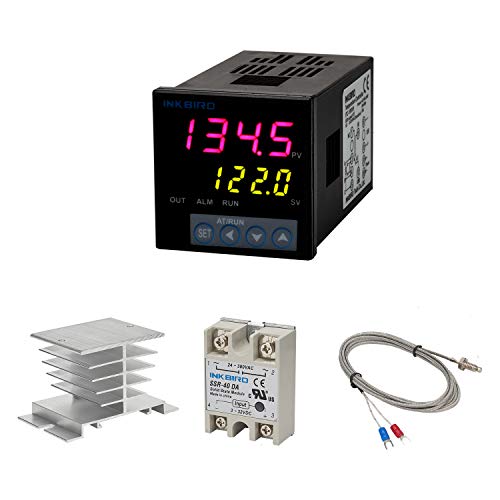
Inkbird PID Temperature Controller Kit
PID controller kit for driving an electric element, used on builds that control mash temperature directly.
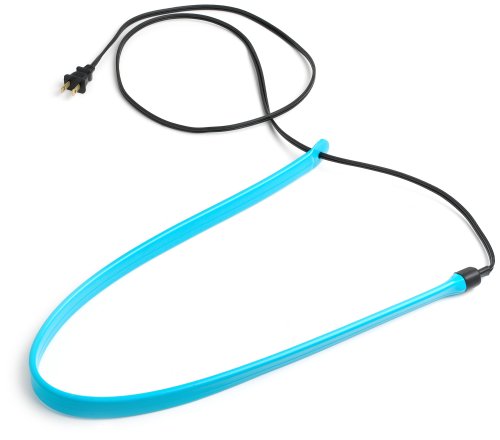
FastRack Fermentation Heating Belt
A wrap-around belt that lifts fermentation temperature in a cold room, the cheapest form of temperature control.

Fermtech Fermentation Heating Belt
Electric warming belt sized for a carboy, jug or bucket.

Tilt Wireless Hydrometer and Thermometer
A floating sensor that reports gravity and temperature over Bluetooth, so you can confirm stable gravity without opening the fermenter.
Related on BrewGearCalc
- What a diacetyl rest does
- Cold crashing explained
- How much yeast to pitch
- Yeast pitch rate calculator
Frequently asked questions
- What temperature should I ferment my beer at?
- There is no single universal number, since every yeast strain has its own published temperature range, and that range is printed on the packaging or listed on the manufacturer’s product page. Ale strains generally sit in a moderate range and lager strains run much colder, but two ale strains can still call for meaningfully different targets. Checking the specific strain’s range before brew day matters more than following a generic figure.
- Does fermentation temperature really change the flavor?
- Yes, this is standard yeast biology rather than folklore. Warmer fermentation generally pushes a strain toward more esters and fusel alcohols, which read as fruity or, at higher levels, hot and solventy. Colder fermentation produces a cleaner profile but slows the yeast down, and too cold for the strain can stall fermentation outright. The right target depends on the strain and the flavor profile the recipe is going for.
- How do I cool a fermenter without buying a fridge?
- A swamp cooler is the common low-cost method: set the fermenter in a tub of water, wrap it in a wet towel that wicks water up the sides and evaporates, and point a fan at it. Swapping in frozen water bottles periodically pulls the temperature down further. It takes more manual attention than a dedicated fridge and controller, but it is a genuinely useful option for an occasional warm-weather batch.
- Can I ferment in an uninsulated garage?
- It works fine in mild weather, but an uninsulated garage swings with the outside temperature far more than a house does, which becomes a real problem in cold winters or hot summers when the swing pushes the beer outside the yeast strain’s range for hours at a stretch. A heat belt or a dedicated cooling setup with a controller becomes much more useful once the garage temperature stops being predictable.
- Does fermenting warmer finish faster?
- Often, yes, since yeast activity generally speeds up as temperature rises, within the strain’s tolerance. That speed comes at the cost of more esters and fusel alcohols showing up in the finished beer, and it will not fix a fermentation that has stalled for a different reason, such as underpitching or old yeast. Faster is not automatically better if the flavor profile suffers for it.
- Do I need a temperature controller for a diacetyl rest?
- A controller and heat belt make the temperature rise precise and repeatable, but they are not the only way to do it. Moving the fermenter to a warmer room for a few days works too, as long as you have a way to confirm the beer actually reached and held the higher temperature. A dedicated controller just removes the guesswork and keeps the rise from overshooting.
Researched from published brewing formulas, manufacturer specifications and verified owner reviews. This is general guidance, not professional advice.