Guides
What a Diacetyl Rest Does
A diacetyl rest means letting the beer’s temperature rise roughly 5 to 10 degrees Fahrenheit above primary fermentation temperature for the final 2 to 3 days before packaging, most often done with lagers, so the yeast can reabsorb the buttery-tasting compound diacetyl before it ends up in the glass.
The specific temperature rise and duration are a widely followed brewing convention, not a fixed rule.
Where diacetyl comes from
During fermentation, yeast produce a compound called alpha-acetolactate as a byproduct of building the amino acid valine. Some of that alpha-acetolactate leaks out of the cell into the beer, where it converts non-enzymatically into diacetyl, the compound responsible for a buttery or butterscotch flavor. This chemistry is standard, well-documented brewing science, not a convention.
Healthy, still-active yeast can reabsorb diacetyl from the beer and reduce it further into compounds that are much less flavor-active. Given enough time and a temperature warm enough to keep the yeast working, most fermentations clear diacetyl on their own before packaging without any deliberate intervention.
What it tastes like
At low levels, diacetyl reads as a faint butteriness, sometimes barely noticeable. At higher levels it becomes much more obvious, often described as tasting like movie-theater popcorn butter, and it is considered a flaw in most beer styles at that point. A small number of styles, certain English ales and some Czech-style lagers among them, tolerate or even expect a hint of it as part of the style profile, but that is the exception rather than the rule.
Diacetyl also carries a slick, oily mouthfeel alongside the buttery flavor for many tasters, which is sometimes easier to notice than the flavor itself in a beer that is only mildly affected. Because sensitivity to diacetyl varies quite a bit from person to person, a beer that tastes clean to one taster can read as noticeably buttery to another, which is part of why a hydrometer check is a more consistent signal than taste alone for confirming fermentation has actually finished.
How you would actually notice it
Diacetyl shows up most clearly as a smooth, buttery flavor and, often just as noticeably, a slick or oily texture on the tongue that lingers a beat longer than a clean beer’s finish does. It tends to be easier to pick out in a warm sample than a cold one, since chilling a beer suppresses a lot of its aroma and flavor perception generally, so tasting a small pour at room temperature is a more reliable check than judging straight out of the fridge.
Because people vary quite a bit in how sensitive they are to it, comparing a suspect batch side by side with a beer you already know is clean, ideally the same recipe from an earlier batch, makes a mild case of diacetyl much easier to confirm than tasting the questionable beer alone.
Why a rest is cheaper than finding out later
A diacetyl rest costs a few extra days sitting in the fermenter and, at most, a heat belt or a warmer corner of the house. Discovering diacetyl after the beer is already bottled or kegged costs the batch itself, since there is no practical way to pull the compound back out of finished beer, and the fix at that point is drinking it anyway, dumping it, or waiting to see if it fades on its own over an extended time in the package, which it does not reliably do.
Given that lopsided cost, a rest that turns out to have been unnecessary is a minor loss of time, while skipping one and being wrong about it is a lost batch. That asymmetry is the real argument for building a rest into a lager schedule as routine practice rather than only reaching for one after tasting a problem.
Why lagers need it more than ales
Lager yeast ferments at cold temperatures, and that cold slows the yeast’s own natural cleanup of diacetyl along with everything else it does. Deliberately warming the beer near the end of fermentation speeds that reabsorption process back up, which is why a diacetyl rest is a standard part of most lager schedules.
Ales are usually fermented warmer to begin with, so the yeast’s own cleanup activity is already faster and diacetyl more often clears on its own by the time primary fermentation wraps up. A deliberate rest is less commonly needed for ales, though it remains a reasonable option if a diacetyl off-flavor turns up anyway.
Underpitched or cold-stressed fermentations of any style tend to produce more diacetyl to begin with, since a yeast population that is too small for the batch, or one that gets shocked by a temperature swing early on, produces more of the precursor compound and is also slower to clean it back up afterward. A diacetyl problem in an ale is therefore often a sign of an underlying pitch rate or temperature control issue worth checking, rather than something to treat only with a rest and otherwise ignore.
How to run one
A diacetyl rest is normally started once the beer has reached most of its expected attenuation for that recipe and yeast strain, not right at the start of fermentation. From there, raise the fermenter temperature by roughly 5 to 10 degrees Fahrenheit above the primary fermentation temperature, using a heat belt and controller, or simply moving the fermenter to a warmer space, and hold it there for about 2 to 3 days.
These figures are a widely used convention rather than a fixed rule, and the specific lager strain’s published temperature range is worth checking before deciding exactly where to land the rest temperature.
| Stage | Temperature | Duration |
|---|---|---|
| Primary lager fermentation | commonly cited around 48 to 55°F, strain dependent | until most expected attenuation is reached |
| Diacetyl rest | raised roughly 5 to 10°F above primary | 2 to 3 days |
| Confirm and cool | hold until gravity is stable, then chill for packaging | not fixed |
Diacetyl versus other fermentation off-flavors
Diacetyl is only one of several off-flavors that trace back to fermentation timing rather than ingredients, and it is worth telling apart from the others so a warm rest actually solves the right problem. Acetaldehyde, for example, gives a green-apple or freshly cut pumpkin character and typically comes from racking or bottling too early, before yeast has had time to clean up an intermediate compound produced on the way to making alcohol, and it responds to more time in the fermenter rather than to a temperature change.
Diacetyl is specifically a warm-temperature cleanup problem, tied to how quickly yeast reabsorbs it, which is why raising temperature helps with diacetyl in a way that it does not directly help with every other off-flavor a young beer might show. Recognizing which flavor you are actually dealing with matters before reaching for a rest as the fix.
Building a rest into a lager schedule from the start
Rather than treating a diacetyl rest as an emergency fix applied after tasting a problem, most lager brewing schedules build the rest in as a planned final stage of primary fermentation, before transferring to lagering temperatures for extended cold conditioning. Planning for it ahead of time means the fermenter does not need to be moved or disturbed unexpectedly partway through, and it keeps the total schedule predictable from pitch day through packaging.
For brewers using a single fermentation vessel through both primary fermentation and the rest, the sequence is straightforward: primary at the cold lager temperature until most attenuation is reached, then a controlled rise for the rest, then confirmation of a stable gravity before either cold crashing or moving on to extended lagering.
Confirming it worked
Taste is one check, but it is a subjective one, especially for brewers still learning to recognize diacetyl at lower levels. The more reliable check is a hydrometer reading held stable across several consecutive days, which confirms that fermentation, not just the rest period, has actually finished before moving on to cold crashing or packaging.
That gravity check matters beyond flavor. Bottling on a schedule alone, without confirming a stable reading, is one of the more common paths to bottle bombs, since residual fermentation adds unplanned carbonation on top of whatever priming sugar was calculated in.
Diacetyl rests and dry-hopped lagers
For a dry-hopped lager, the usual order is to complete the diacetyl rest first, confirm a stable gravity, and only then add the dry hops, since a warm rest followed immediately by cold crashing and dry hopping keeps each step distinct and easier to troubleshoot if something tastes off later. Adding hops before the rest is not unheard of, but it makes it harder to tell whether a lingering off-flavor came from an incomplete rest or from the hop addition itself.
The rest itself does not need to happen at the same vessel or even the same temperature-controlled space used for primary fermentation, as long as the beer can be moved without excessive splashing or oxygen exposure. Some brewers simply unplug a chest freezer’s controller and let the whole thing warm passively for the rest period, then plug it back in and set a colder target once the rest is confirmed complete.
What a diacetyl rest will not fix
Not every source of diacetyl responds to a warm rest. Certain bacteria, Pediococcus among them, can produce diacetyl continuously as part of an infection, and yeast do not reabsorb it the same way they do diacetyl from their own normal fermentation byproducts. If diacetyl persists, or gets worse, after a properly run rest and a confirmed stable gravity, an infection is worth suspecting rather than assuming the rest simply did not run long enough.
Everything else worth considering

Inkbird ITC-308 Temperature Controller
Two stage plug-in thermostat that switches a fridge and a heater, which is how most brewers hold fermentation temperature.

Inkbird WiFi ITC-308 Temperature Controller
The WiFi version, which logs fermentation temperature and alerts you when it drifts.

Inkbird PID Temperature Controller Kit
PID controller kit for driving an electric element, used on builds that control mash temperature directly.
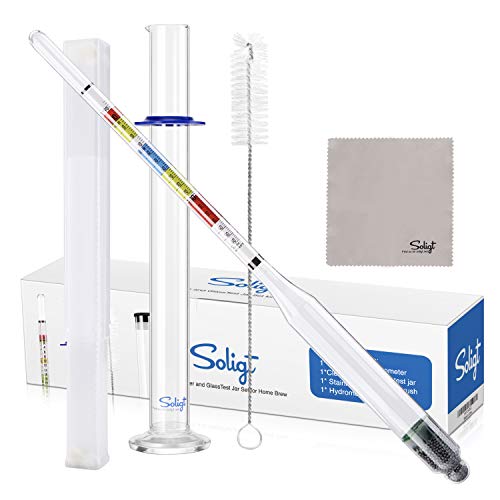
SOLIGT Triple Scale Hydrometer with Glass Test Jar
Hydrometer reading ABV, Brix and specific gravity, supplied with a glass jar.
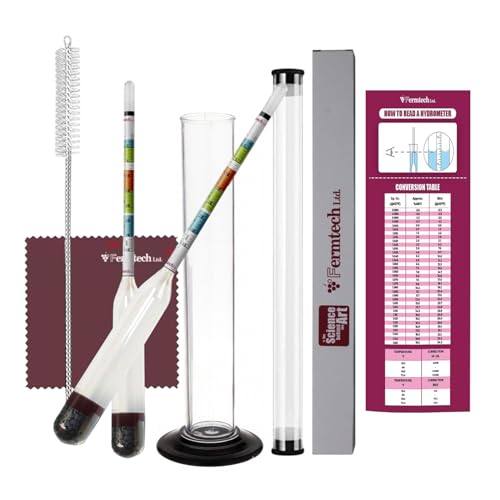
Fermtech Glass Triple Scale Hydrometer Kit
Triple scale glass hydrometer for beer, wine, mead and cider.

Fermentaholics Hydrometer Test Jar
Measuring cylinder for taking a gravity sample without dropping the hydrometer into the fermenter.
Before you do this
A diacetyl rest is not proof that fermentation has finished. Confirm a stable hydrometer reading across several consecutive days before bottling, since bottling on attenuation estimates alone, without checking gravity, is how bottle bombs happen.
Related on BrewGearCalc
- Fermentation temperature control
- Cold crashing explained
- Hydrometer correction calculator
- How much yeast to pitch
Frequently asked questions
- What causes diacetyl in beer?
- Yeast produce a compound called alpha-acetolactate while building the amino acid valine during fermentation. Some of it leaks out of the cell and converts non-enzymatically into diacetyl, which reads as a buttery or butterscotch flavor at real concentrations. This is standard, well-documented fermentation chemistry rather than a rule of thumb. Healthy, still-active yeast can reabsorb that diacetyl later in fermentation and reduce it into far less flavor-active compounds, which is what a diacetyl rest is designed to speed up.
- Do ales need a diacetyl rest?
- Usually not, since ales ferment warmer to begin with and the yeast’s own cleanup activity is already faster than it is in a cold lager fermentation, so diacetyl commonly clears on its own by the end of primary fermentation. A deliberate rest is less routine for ales, but it is still a reasonable option to run if a diacetyl off-flavor shows up in an ale that should not have one.
- How do I know if my beer actually has diacetyl?
- Taste is the most direct check, since diacetyl reads as a distinct buttery or butterscotch flavor, sometimes described as tasting like movie-theater popcorn butter at higher levels. It can be subtle at low concentrations and easy to miss if you are not used to identifying it. Tasting warm samples, since diacetyl is more perceptible warm than cold, and comparing against a beer you know is clean, both help build a more reliable sense of it.
- Can a diacetyl rest fix beer that is already bottled?
- Not directly. A diacetyl rest relies on active, still-working yeast reabsorbing the compound at a warmer temperature, which is a fermenter-stage process. Once a beer is bottled and carbonated, there is little practical way to run the same rest. If diacetyl shows up after bottling, the more useful lesson is to build a rest into the schedule on the next batch of that recipe rather than trying to fix the one already in bottles.
- How long should a diacetyl rest last?
- A common convention is 2 to 3 days once the beer has reached most of its expected attenuation, held at roughly 5 to 10 degrees Fahrenheit above the primary fermentation temperature. That range is a widely followed home-brewing habit rather than a fixed rule, and the real signal that the rest is finished is a stable hydrometer reading and a flavor check, not the calendar alone.
- Could my diacetyl be from an infection instead of fermentation?
- It is possible. Certain bacteria, Pediococcus among them, produce diacetyl continuously as part of an active infection, and yeast do not reabsorb bacterially produced diacetyl the way they do their own fermentation byproduct. If diacetyl persists or worsens after a properly run rest with a confirmed stable gravity, an infection is a reasonable next suspect rather than assuming the rest simply needed more time.
Researched from published brewing formulas, manufacturer specifications and verified owner reviews. This is general guidance, not professional advice.