Charts
Brewing Salts Reference Chart
One gram of gypsum added per gallon raises calcium by about 61.5 ppm and sulfate by about 147.4 ppm, and these standard ion contributions follow directly from each salt's molar mass.
The sulfate to chloride ratio, commonly used as a shorthand for malty versus hoppy balance, is a brewing convention rather than a chemical law, and should be read as a rough guide rather than a precise flavour prediction.
What each brewing salt actually adds to the water
Each brewing salt is a specific chemical compound, and dissolving a known weight of it in a known volume of water adds a predictable amount of each ion the compound is made of. These contributions follow directly from the molar mass of the compound and are standard chemistry, not brewing convention, which is why the same figures show up consistently across water chemistry calculators and references. The table below gives the ion contribution in ppm per gram of salt added per gallon of water, the same basis this site's water chemistry calculator uses.
Gypsum, calcium sulfate dihydrate, is the workhorse salt for adding sulfate without much else, and it is the salt most associated with the dry, sulfate-forward character of Burton style pale ales. Calcium chloride adds calcium alongside chloride instead of sulfate, making it the salt of choice when a brewer wants calcium's mash chemistry benefits without pushing the beer toward a sulfate-driven dryness. Epsom salt, magnesium sulfate heptahydrate, adds magnesium and sulfate together, and is used sparingly since magnesium in excess can contribute a harsh, bitter mineral note. Table salt and baking soda both add sodium, paired with chloride and bicarbonate respectively, and baking soda in particular is one of the few practical ways to raise alkalinity for dark, roasted beers that need it.
| Salt | Compound | Ion 1 | Contribution | Ion 2 | Contribution |
|---|---|---|---|---|---|
| Gypsum | CaSO4 . 2H2O | Calcium (Ca) | +61.5 ppm | Sulfate (SO4) | +147.4 ppm |
| Calcium chloride | CaCl2 . 2H2O | Calcium (Ca) | +72.0 ppm | Chloride (Cl) | +127.4 ppm |
| Epsom salt | MgSO4 . 7H2O | Magnesium (Mg) | +26.0 ppm | Sulfate (SO4) | +103.0 ppm |
| Table salt | NaCl | Sodium (Na) | +103.9 ppm | Chloride (Cl) | +160.3 ppm |
| Baking soda | NaHCO3 | Sodium (Na) | +72.3 ppm | Bicarbonate (HCO3) | +191.3 ppm |
| Chalk | CaCO3 | Calcium (Ca) | +105.7 ppm (see note) | Bicarbonate (HCO3) | +158.4 ppm (see note) |
Why chalk is listed differently
Chalk, calcium carbonate, has the highest calcium contribution per gram on paper, but that figure describes what would happen if the full amount fully dissolved, and chalk is very poorly soluble in plain water. In practice, most of the chalk added to a mash or to sparge water does not actually dissolve, especially without the extra carbon dioxide that dissolved chalk needs to stay in solution. The 105.7 ppm calcium and 158.4 ppm bicarbonate figures in the table above are the theoretical maximum from full dissolution, and they meaningfully overstate what actually reaches your water from a typical addition.
Because of this solubility limit, many brewers who want to raise bicarbonate reliably use baking soda instead of chalk, since baking soda is genuinely soluble and its full stated contribution actually reaches the water. Chalk still has a role, particularly in mash chemistry where the presence of acid from dark grains can help dissolve more of it than plain water would, but it should never be treated as a precise, fully reliable addition the way gypsum or calcium chloride can be.
Scaling a single gram figure to a real batch
The ppm per gram per gallon figures scale directly with both the amount of salt added and the batch volume, since they describe a linear relationship. The table below shows how many grams of each salt, added to a 5 gallon batch, are needed to raise the relevant ion by 50 ppm, calculated directly from the standard contributions above rather than as a separate figure.
| Salt | Target ion | Grams for +50 ppm in 5 gallons |
|---|---|---|
| Gypsum | Sulfate | 1.7 g |
| Calcium chloride | Chloride | 2.0 g |
| Epsom salt | Sulfate | 2.4 g |
| Table salt | Sodium | 2.4 g |
| Baking soda | Bicarbonate | 1.3 g |
The sulfate to chloride ratio is a convention, not a chemical rule
Brewers commonly use the ratio of sulfate to chloride in a water profile as a rough guide to whether a beer will lean toward a drier, more bitter-accentuating character or a rounder, maltier, fuller character. This ratio is a widely repeated brewing convention built from accumulated homebrewing experience, not a chemical law, and it should be treated the same way as other conventions on this site such as a target pitch rate or a target efficiency: broadly useful as a starting heuristic, not a guarantee of a specific outcome for every recipe.
A low ratio, sulfate well below chloride, is commonly associated with a softer, maltier balance, while a high ratio, sulfate well above chloride, is commonly associated with a drier, hop-accentuating balance. The exact numeric boundaries between these bands vary between different brewers and different published guides, which is itself a sign that the ratio is a convention rather than a fixed specification. Hop variety, total mineral content, and the grain bill itself all interact with this ratio, so the same ratio can read differently in two different recipes.
| Approximate ratio | Commonly described character |
|---|---|
| Below 0.5 | Malty, round, chloride-forward |
| 0.5 to 1 | Balanced, leaning malty |
| 1 to 2 | Balanced, leaning toward hop accentuation |
| Above 2 | Dry, crisp, sulfate-forward, hop accentuating |
Order of operations for a real addition
Most brewers dissolve salts directly into the brewing liquor before it reaches the grain, either in the hot liquor tank ahead of the mash or stirred into the kettle water before heating, rather than sprinkling them over the grain bed itself. Splitting the total salt addition between mash water and sparge water in proportion to each volume keeps the combined concentration in the final wort close to the intended target, since the ion contributions on this page describe what a gram of salt does to a gallon of water, and the final wort is a blend of whatever water sources went into it.
Weighing salts on a small gram scale rather than measuring by kitchen spoon matters more than it might seem, because the additions involved are frequently under two or three grams for a five gallon batch, and different salts pack to different densities in a measuring spoon. A scale accurate to a tenth of a gram removes that source of error entirely and is one of the cheaper pieces of gear a water-focused brewer can own.
Chlorine and chloramine treatment is a separate step from the mineral additions on this page, and it should happen first. A Campden tablet, potassium metabisulfite, neutralizes chlorine and chloramine in tap water before brewing salts go in, and it does not add any of the ions covered in the table above in a meaningful amount. Treating chlorine after adding brewing salts does not undo any damage chlorine compounds may have already caused to flavour during the time they were in contact with the water.
Know which water volume a target ppm applies to
The ppm per gram per gallon figures in this chart describe the effect of a salt on whatever volume of water it is actually dissolved into, and different calculators and recipes are not always consistent about which volume that is meant to be, total mash and sparge water combined, or just the strike water going into the mash. Adding a full target dose of salt only to the strike water, then sparging with untreated water, produces a more diluted final concentration in the finished wort than the same total addition split proportionally across both waters.
Before entering a target ppm into any calculator, including the one on this site, confirm whether it expects the figure to apply to total brewing water or to a specific portion of it, and structure the salt additions to match that assumption. This single point of confusion, more than any error in the ion contribution figures themselves, is the most common reason a brewer's actual water chemistry ends up noticeably different from what a recipe intended.
Everything else worth considering

Craft A Brew Gypsum (calcium sulfate, 4 oz)
Calcium sulfate, which raises calcium and sulfate and is the salt used to sharpen hop bitterness.

LD Carlson Gypsum (1 lb)
One pound of brewing gypsum, which at typical dose rates lasts years.

Craft A Brew Calcium Chloride (4 oz)
Calcium chloride, which raises calcium and chloride and is the salt associated with a rounder, fuller palate.

Home Brew Ohio Calcium Chloride (1 lb)
Bulk calcium chloride for brewers adjusting every batch.

TAPCRAFT Brewing Salts Set
A set of the common brewing salts for building regional water profiles from a single purchase.

TAPCRAFT Campden Tablets (potassium metabisulfite, 50 count)
Removes chlorine and chloramine from tap water, which otherwise produce a medicinal off flavour.

LD Carlson Potassium Metabisulfite (2 oz)
Loose potassium metabisulfite for water treatment and, in cider making, for knocking back wild yeast.
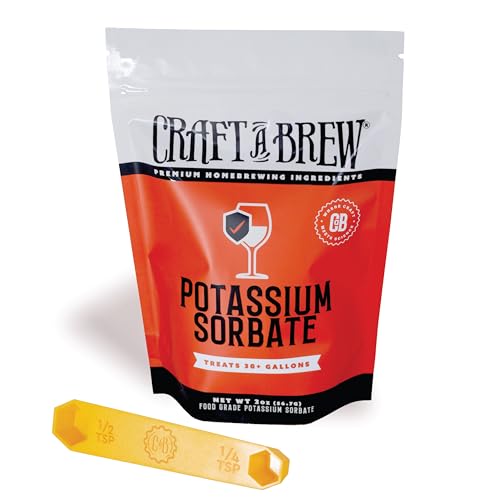
Craft A Brew Potassium Sorbate (2 oz)
Stabiliser used when back-sweetening cider or mead, which prevents the new sugar refermenting in the bottle.

YINMIK Digital pH Meter with ATC
Pocket pH meter with automatic temperature compensation for checking mash pH. It must be calibrated against buffer solutions to mean anything.

Digital Pocket Scale 200 g x 0.01 g
Hundredth of a gram resolution, which is the precision hop additions and water salts actually need.
Before you do this
Some water treatment additions are handled alongside caustic cleaners in a typical brew day. PBW and other alkaline cleaners burn skin and eyes and must never be mixed with an acid based sanitiser, so keep salt and pH additions on a separate part of the bench from any cleaning chemicals in use.
Related on BrewGearCalc
- Water chemistry calculator
- Strike water calculator
- Reference charts
- Brewing guides
- Best brewing gear
Frequently asked questions
- How much gypsum do I need to add to raise sulfate by a specific amount?
- Gypsum contributes about 147.4 ppm of sulfate per gram per gallon of water, along with 61.5 ppm of calcium. To find the grams needed for your batch, multiply your batch volume in gallons by the ppm increase you want, then divide by 147.4. For a 5 gallon batch aiming for a 50 ppm sulfate increase, that works out to roughly 1.7 grams, matching the scaled table above.
- Why does chalk show a lower real world contribution than the math suggests?
- Chalk, calcium carbonate, is very poorly soluble in plain water, so a large share of what gets added does not actually dissolve and never reaches the water as calcium and bicarbonate ions. The stated ppm per gram figures for chalk describe complete dissolution, which rarely happens in practice, so treat chalk additions as unreliable compared to a genuinely soluble salt like baking soda when precise bicarbonate control matters.
- Is a high sulfate to chloride ratio always the right choice for a hoppy IPA?
- A higher ratio is a commonly used convention for accentuating hop bitterness and dryness, and it suits many IPAs, but it is not a strict requirement and some hop-forward beers use a more moderate ratio for a rounder mouthfeel alongside the hop character. Since the ratio is a brewing convention rather than a chemical rule, the right choice depends on the specific hops, grain bill, and the flavour balance the recipe is aiming for.
- Can I use table salt instead of calcium chloride to boost mash chemistry?
- No. Table salt contributes sodium and chloride, while calcium chloride contributes calcium and chloride, and it is specifically the calcium ion that supports mash enzyme activity, yeast health, and clarity. Table salt is used in brewing mainly for its sodium contribution to mouthfeel in small amounts, not as a substitute for a calcium-bearing salt like gypsum or calcium chloride.
- What happens if I add too much Epsom salt to a batch?
- Magnesium in excess, which Epsom salt contributes alongside sulfate, tends to produce a harsh, bitter, sometimes metallic mineral character rather than a pleasant one. Most brewing water already carries some magnesium naturally, and grain itself contributes magnesium during the mash, so Epsom salt is generally used in small, deliberate amounts rather than as a primary lever for adjusting water chemistry.
- Do brewing salts affect mash pH the same way they affect flavour ions?
- Calcium from gypsum and calcium chloride does help lower mash pH through reactions with grain phosphates, which is a real chemical effect beyond flavour, while sodium and chloride from table salt have little direct effect on pH. Baking soda raises alkalinity and can push mash pH upward, which is useful for dark, acidic grain bills but counterproductive for an already pale, low acidity mash.
Researched from published brewing formulas, manufacturer specifications and verified owner reviews. This is general guidance, not professional advice.