Reviews
Brewer's Edge Mash and Boil Series 2 with Pump Review
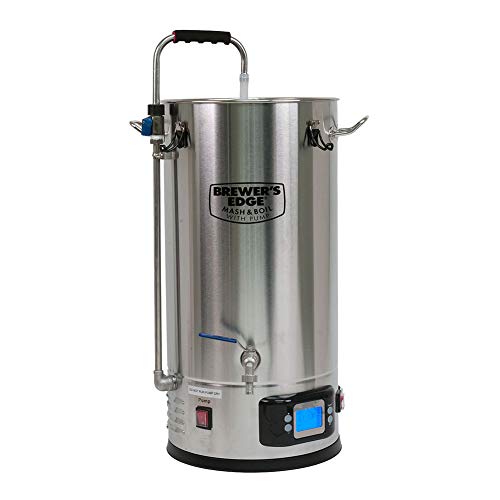
The Brewer's Edge Mash and Boil Series 2 with Pump is an intermediate all-in-one electric brewing system priced at $437.56, and it suits a brewer who wants recirculation in a single vessel without paying expert-tier prices, though its listing does not state a batch capacity figure.

Brewer's Edge Mash & Boil Series 2 with Pump
Brewers Edge
It adds a pump to the familiar Brewer's Edge single-vessel format for well under expert-tier pricing, which is the main reason to choose it over the pump-free Series 2.
Price last checked at publication and changes often.
How this review was put together
Nobody on this site owns a Brewer's Edge Mash and Boil Series 2 with Pump. What follows comes from the published listing details available for this specific configuration, the pricing and tier data in this catalog, and what verified owner reviews consistently report about this general category of single-vessel recirculating system. Nothing here is presented as a hands-on measurement, and where the listing simply does not say something, that gap is stated rather than papered over.
What the Series 2 with Pump actually is
The Series 2 with Pump is a single-vessel, all-in-one electric brewing system from the Brewer's Edge Mash and Boil line, built around an internal heating element, a digital controller, and an added pump for wort recirculation compared with the base Series 2. At $437.56 it sits in the intermediate tier of this catalog, priced above the pump-free Series 2 at $369.95 and close to, but slightly below, the BrewZilla Gen 3.1.1 at $469.95.
The pump is the entire reason to pick this configuration over the base Series 2. A recirculating mash keeps temperature and enzyme activity more even across the grain bed than a static one, which is the same argument that applies to every pump-equipped all-in-one in this catalog.
The capacity gap in this listing
This is the honest gap worth naming directly. The published listing used for the Series 2 with Pump does not state a batch or vessel capacity figure. A related product in this catalog, the non-Series 2 Mash and Boil with Pump, does explicitly state a 7.5 gallon capacity at $439.99, just under two dollars more than the Series 2 version. It would be easy to assume the Series 2 shares that same 7.5 gallon sizing, but an assumption is not a published fact, and this review will not present it as one.
A buyer for whom exact batch volume is a hard requirement should confirm the figure directly with the manufacturer or the specific retail listing before buying. If that confirmation matters more than the small price difference, the non-Series 2 Mash and Boil with Pump at $439.99 is the safer choice precisely because its capacity is stated in writing.
Specifications
| Model | Pump | Capacity | Price |
|---|---|---|---|
| Mash and Boil (base) | Not stated in listing | Not stated in listing | $369.95 |
| Mash and Boil with Pump | Included | 7.5 gal | $439.99 |
| Mash and Boil Series 2 | Not included | Not stated in listing | $369.95 |
| Mash and Boil Series 2 with Pump | Included | Not stated in listing | $437.56 |
Who this system fits
This suits a brewer who already owns a Brewer's Edge product or prefers its control layout, wants a pump added without paying for a 35 liter BrewZilla or an $870.20 Grainfather G30, and is comfortable confirming capacity separately before ordering. It is a weaker fit for a buyer who wants every spec locked down on the product page itself, since the non-Series 2 pump model in this same catalog answers that need for about two dollars more.
Where owner reports raise flags
Owner reviews of single-vessel recirculating systems in this general category commonly mention two habits worth building in early. Grain particles can work their way toward the pump inlet and slow or stop recirculation mid-mash, which is usually solved with a finer mesh basket liner or a brief pause to clear the intake. Probe placement in a compact single vessel can also read slightly warmer or cooler than the true grain bed temperature, so cross-checking mash temperature with a separate calibrated thermometer during the first few batches is a reasonable habit rather than an overreaction.
How it compares to the alternatives
At $437.56, this sits almost exactly between the Series 2 without a pump at $369.95 and the BrewZilla Gen 3.1.1 at $469.95, which does state a 35 liter capacity. A buyer choosing purely on confirmed information, rather than brand preference, may find the Gen 3.1.1 the more transparent option for roughly $32 more, since it at least states its vessel size even though its listing does not confirm a pump either way.
Against the base Series 2 at $369.95, the $67.61 difference buys the pump and nothing else that is confirmed in writing. Whether that is worth it depends entirely on how much a brewer values recirculation, since neither Series 2 listing states a capacity to compare.
What a digital controller actually buys you over a cooler mash tun
A digital controller holds a mash temperature steady through the rest and can usually step between multiple rest temperatures, which is the main functional upgrade over a cooler mash tun that simply loses heat gradually over the course of an hour. For a beer style that benefits from a rest at more than one temperature, that stepping ability matters more than the pump does on its own. A brewer who mostly brews single-infusion mashes at one temperature will get less practical benefit from the controller's stepping feature specifically, even though the pump still helps with even conversion across the grain bed.
It is also worth being clear about what the controller does not do. It does not compensate for an unconfirmed vessel capacity, and it does not tell a brewer their actual mash thickness or strike water volume. Those numbers still need to be calculated for a specific grain bill using a mash water calculator before brew day, regardless of how capable the built-in controller is.
What a brew day and the cleanup after it actually involve
Like every single-vessel system in this catalog, the Series 2 with Pump sits in one spot near an outlet for the full mash and boil, and a full vessel is heavy enough that pouring or siphoning into a fermenter beats lifting the whole unit. Whether a specific listing you are viewing includes a drain valve is worth confirming directly, since gravity transfer through a valve is easier and safer than tilting a hot vessel by hand.
After the boil, the pump housing and any tubing need to be flushed and cleaned along with the vessel itself, since recirculating systems have more internal surface area for wort residue to hide in than a simple kettle does. Owner reviews of similar recirculating single-vessel systems commonly mention checking the pump inlet for trapped hop matter or grain fines as a routine part of cleanup, not an occasional troubleshooting step, so building that check into every session avoids a slow or clogged pump on the next brew day.
Where the extra $67.61 over the base Series 2 goes, and where it doesn't
The price difference between the base Series 2 at $369.95 and the Series 2 with Pump at $437.56 is entirely accounted for, based on the published listings, by the addition of a pump. Nothing in either listing suggests a larger vessel, a different heating element, or additional included accessories at the higher price point, which means a buyer paying the premium should be doing so specifically for recirculation and not for some assumed general upgrade in build quality.
That is a useful way to frame the decision. If recirculation is not a priority for a first few all-grain batches, the base Series 2 does the same job for $67.61 less, and the money saved could instead go toward a wort chiller or a refractometer, both of which have a more direct effect on a beginner's actual brew day than a pump does at this early stage.
Cleaning and safety
Like any recirculating electric system, the pump path and heating element need an alkaline cleaner such as PBW run through them after each batch, followed by a full rinse and a separate acid-based sanitiser like Star San. The two chemicals must never be combined, since PBW is alkaline and Star San is acidic, and mixing them defeats both while creating a real skin and eye hazard. Being electric rather than propane-fired also means this system avoids the carbon monoxide risk that makes propane burners an outdoor-only tool.
The verdict
The Series 2 with Pump is a reasonable intermediate pick for a brewer who wants recirculation without expert-tier pricing and is willing to confirm capacity separately. It is not the most transparent listing in this catalog, and a buyer who wants that transparency built in should strongly consider the $439.99 Mash and Boil with Pump instead, which states its 7.5 gallon capacity plainly.
The three tiers
These are three genuinely different builds, not the same product at three prices. Buy the tier that matches how much you already know you will use it.
Brewer's Edge Mash & Boil Series 2 (no pump)
Brewers Edge
Dropping the pump saves $67.61 versus the Series 2 with Pump, which is a reasonable trade for a first all-grain batch where recirculation is not yet a priority.
$369.95
View on AmazonBrewZilla Gen 3.1.1 (35L)
Kegland
At $469.95 it costs about $32 more but states a 35 liter capacity outright, which some buyers will value more than the price difference.
$469.95
View on AmazonGrainfather G30 (3rd generation)
Grainfather
At $870.20 this is for a brewer already committed to the Grainfather ecosystem. It is not worth it for someone on a tighter budget or anyone who needs a confirmed capacity figure before buying, since this listing does not provide one either.
$870.20
View on AmazonEverything else worth considering
Brewer's Edge Mash and Boil with Pump (7.5 gal)
All-grain electric system with pump, 7.5 gallon capacity, no propane or separate mash tun required.

VEVOR Electric Brewing System (9.2 gal)
Budget 35 litre all-in-one with pump, the cheapest route to a full electric mash and boil.

FOHERE All-in-One Electric Brewing System (9.2 gal)
A 35 litre single-vessel electric system at entry pricing.

Inkbird ITC-308 Temperature Controller
Two stage plug-in thermostat that switches a fridge and a heater, which is how most brewers hold fermentation temperature.

Five Star PBW Cleanser (4 lb)
The four pound tub, which is the sensible size once you are brewing regularly.

Five Star Star San (32 oz)
High foaming no-rinse acid sanitiser. One ounce treats five gallons, so a single bottle lasts most brewers a very long time.
Before you do this
PBW and other alkaline cleaners burn skin and eyes and must never be mixed with an acid sanitiser such as Star San. As an electric system it does not carry the carbon monoxide risk of a propane burner, but any propane equipment used elsewhere in a home brewery must stay outdoors regardless of what system sits on the counter.
Related on BrewGearCalc
- Mash water calculator
- Boil-off calculator
- BrewZilla Gen 4 review
- VEVOR electric system review
- Compare all-in-one systems
- All system reviews
Frequently asked questions
- Does the Brewer's Edge Mash and Boil Series 2 with Pump state its batch capacity?
- No. The published listing used for this catalog does not state a capacity figure for the Series 2 with Pump. A related product, the non-Series 2 Mash and Boil with Pump, does state a 7.5 gallon capacity at a very similar price. If confirmed volume matters to your decision, either buy that version instead or contact the manufacturer directly before ordering the Series 2.
- What is the difference between the Series 2 and the Series 2 with Pump?
- Based on the published listings, the difference is the pump itself. The base Series 2 costs $369.95 and its listing states it does not include a pump, while the Series 2 with Pump costs $437.56 and includes one for wort recirculation. Neither listing states a vessel capacity, so the $67.61 difference buys recirculation only, not a documented change in size.
- Is it worth paying more for the non-Series 2 pump model instead?
- It can be. The non-Series 2 Mash and Boil with Pump costs $439.99, about two dollars more than the Series 2 with Pump at $437.56, but its listing explicitly states a 7.5 gallon capacity. For a buyer who wants every spec confirmed before ordering rather than assumed, that small price difference buys real information the Series 2 listing does not provide.
- How do I clean the pump and recirculation path after brewing?
- Run an alkaline cleaner such as PBW through the recirculation path while it is still warm from the brew, then rinse thoroughly with clean water before sanitising separately with an acid-based product like Star San. Never combine PBW and Star San in the same wash, since the two are chemically incompatible and the alkaline cleaner alone can burn skin and eyes on contact.
- Can grain clog the pump on a system like this?
- It can, and owner reviews of similar single-vessel recirculating systems commonly mention grain particles slowing or stopping flow at the pump inlet during the mash. A finer mesh basket liner, a bag over the grain bed, or briefly pausing recirculation to clear the intake are the usual fixes reported for this kind of issue across this category of system.
- Who should buy the BrewZilla Gen 3.1.1 instead of this system?
- A buyer who wants a stated 35 liter capacity in writing, and is willing to pay about $32 more than the Series 2 with Pump, should look at the BrewZilla Gen 3.1.1 at $469.95. Its listing does not confirm a pump either way, so if a pump is the priority rather than a stated volume, the Series 2 with Pump remains the better documented choice for that specific feature.
Researched from published brewing formulas, manufacturer specifications and verified owner reviews. This is general guidance, not professional advice.