Calculator
Grain Bill Calculator
Target gravity to pounds of malt, with efficiency flagged as the assumption it is.
The arithmetic is standard and the malt potential comes from the maltster analysis sheet, so that is standard too. Efficiency is the part that is yours alone: it depends on your crush, your mash and your sparge, and nobody else can predict it. Use 72 percent for a first batch, measure what you actually achieved, then use your own number from then on.
The formula
The arithmetic is standard and the malt potential comes from the maltster analysis sheet, so that is standard too. Efficiency is the part that is yours alone: it depends on your crush, your mash and your sparge, and nobody else can predict it. Use 72 percent for a first batch, measure what you actually achieved, then use your own number from then on.
What rests on a standard and what rests on convention
- Standard The arithmetic, and published malt potential from an analysis sheet.
- Convention A 72 to 75 percent efficiency assumption before you have measured your own.
A standard is a published equation, a published constant or a manufacturer specification. A convention is widely repeated brewing practice with no governing document behind it. Both are useful. Confusing one for the other is how a habit ends up being quoted as a fact.
Mills and scales
This grid re-orders itself against the numbers you enter above. Prices are those returned when the page was built and change often.
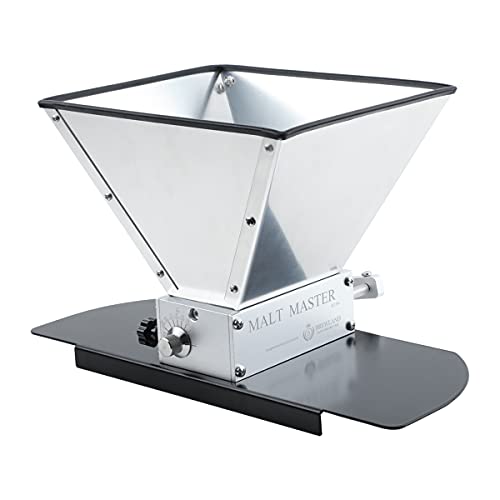
Brewland 2 Roller Grain Mill with Hopper
Adjustable two roller malt mill, which lets you crush your own grain and control efficiency directly.

Ferroday 2 Roller Stainless Grain Mill
Two roller stainless malt mill at entry pricing.

Brewland Grain Mill Pro (3 roller, 13 lb hopper)
Three roller mill on a steel base with a thirteen pound hopper, for brewers milling large grain bills.
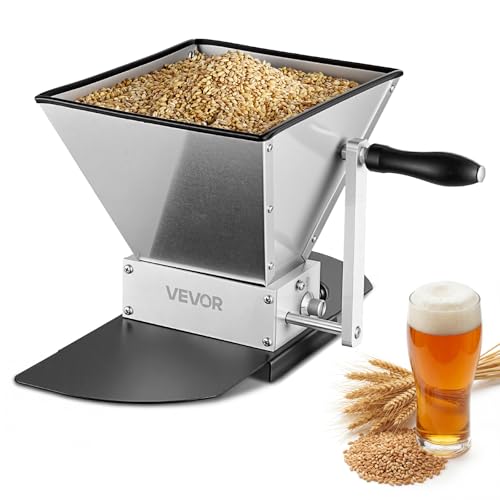
VEVOR Manual Grain Mill
Adjustable manual barley crusher for homebrew malt.

Digital Pocket Scale 200 g x 0.01 g
Hundredth of a gram resolution, which is the precision hop additions and water salts actually need.

BOMATA 1 kg x 0.01 g Digital Scale
Wider range 0.01 g scale, which covers both salt additions and whole hop packets.

Bonvoisin Digital Lab Scale 600 g x 0.01 g
Laboratory balance with a draft shield style body, for brewers building water profiles by the tenth of a gram.
Related on BrewGearCalc
Frequently asked questions
- What efficiency should I assume before I know mine?
- Around 72 to 75 percent is the usual starting point, and it is convention rather than specification. Brew one batch with that assumption, record your actual gravity and volume, and calculate what you really achieved. From then on use your own figure. Efficiency is a property of your system and your milling, so a borrowed number is close to meaningless.
- Why did I miss my gravity with the right grain bill?
- Crush is the most common cause by a wide margin. Grain that passes through the mill too whole never fully converts, and that sugar simply never reaches the kettle. After crush come mash temperature, sparge technique, and inaccurate volume measurement. Recalculate from your measured gravity and volume rather than guessing at a correction.
- Does malt potential vary between grains?
- Yes. Pale base malts sit near 37 points per pound per gallon, while specialty and roasted malts are generally lower, and sugars are higher. The maltster publishes the figure on the analysis sheet for the specific lot. For a mixed grain bill the honest approach is to work each grain out at its own potential and add them.
Researched from published brewing formulas, manufacturer specifications and verified owner reviews. This is general guidance, not professional advice.