Best Gear
Best Grain Mills
The Brewland 2 Roller Grain Mill with Hopper at $95.99 is the best grain mill for most home brewers moving into all-grain, because the hopper lets you feed a full grain bill without scooping handfuls at a time.
Brewers milling large batches regularly should look at the Brewland Grain Mill Pro at $199.86, which adds a third roller and a 13 lb hopper for more capacity per pass.
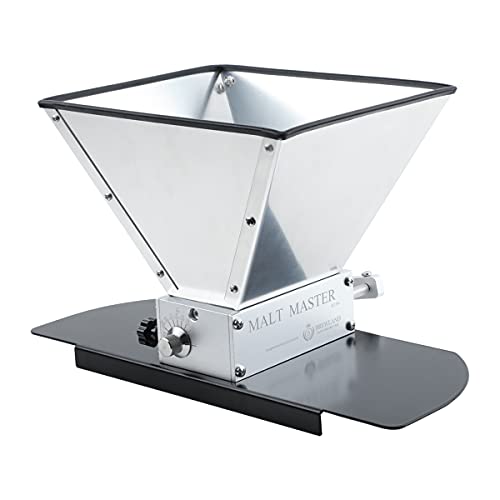
Brewland 2 Roller Grain Mill with Hopper
Brewland
A 2 roller mill with a hopper at $95.99 lets you load a full grain bill and crank through it without repeatedly refilling by hand, at a price close to mills that don't include a hopper at all.
Price last checked at publication and changes often.
Why home brewers mill their own grain
Crushing grain yourself, rather than relying on a homebrew shop's mill or pre-crushed grain, gives you control over crush consistency and lets you mill immediately before brewing rather than days or weeks ahead, when a pre-crushed grain bill has had more time to lose freshness and expose more surface area to oxygen. A mill also pays for itself over enough batches compared to a shop's milling fee, if your local shop charges one.
Every mill in this catalog uses rollers rather than a blade, which is the standard approach for crushing malted grain for brewing: rollers crack the husk and expose the starchy interior without pulverizing the husk into fine particles that can clog a mash tun's false bottom or cause a stuck sparge.
The catalog's mills are all manual, hand crank designs. None of them include a motor, though a 2 or 3 roller mill with a hex-shaped crank shaft can typically be driven with a hand drill instead of turning it by hand, depending on the specific model's crank design.
How we chose
The roller count, hopper details and price below are taken from the manufacturer specifications published on each listing, along with verified purchase owner reviews describing crush consistency and how well a hopper holds a full grain bill without jamming. This is not the result of a side by side milling test run by this team; it reflects the published specifications and what verified owners report after milling with these units themselves.
How the mills compare
Price in this catalog tracks roller count and hopper capacity, with a noticeable jump for the 3 roller model that states a specific hopper capacity on its listing.
| Mill | Type | Price |
|---|---|---|
| VEVOR Manual Grain Mill | Manual grain mill | $93.90 |
| Ferroday 2 Roller Stainless Grain Mill | 2 roller, stainless | $92.90 |
| Brewland 2 Roller Grain Mill with Hopper | 2 roller, with hopper | $95.99 |
| Brewland Grain Mill Pro (3 roller, 13 lb hopper) | 3 roller, 13 lb hopper | $199.86 |
Choosing by how much grain you actually mill
The VEVOR Manual Grain Mill at $93.90 is a fully manual entry point into milling your own grain, priced under $100. Its listing does not state a hopper capacity, so plan on feeding it in smaller amounts if it does not include one large enough for a full grain bill, and expect real physical effort turning the crank through a full 10 pound or larger grain bill by hand.
The Brewland 2 Roller Grain Mill with Hopper at $95.99 costs almost the same as the VEVOR mill but adds a hopper, which is the single feature that matters most for not babysitting the mill while it runs. Loading a full grain bill into a hopper and cranking through it continuously is a meaningfully different experience than repeatedly refeeding a mill by hand a few ounces at a time.
The Brewland Grain Mill Pro at $199.86 steps up to a 3 roller design with a stated 13 lb hopper, which is enough for large grain bills used in bigger batches or high gravity recipes in one pass, and a 3 roller mill's listing typically allows for drill-driven operation, which speeds up milling further. Brewers who only brew an occasional standard 5 gallon batch don't need this much hopper capacity or the added price; a 2 roller mill with a smaller hopper handles a typical grain bill just as well for less money.
Getting a consistent crush without over-processing your grain
A finer crush generally improves mash efficiency by exposing more surface area to the mash water, but crushing too fine, especially with a roller gap set too tight, can shred husks into small fragments that clog a mash tun's false bottom and cause a stuck sparge, where wort stops draining freely. None of the mills in this catalog state an adjustable roller gap in their published specs beyond what's noted above, so if gap adjustment matters to your process, check the specific listing's stated adjustability before buying.
Weighing your grain bill accurately before milling matters just as much as the crush itself, since a mill can only process the grain you actually measured out. A kitchen or brewing scale, weighed against the grain bill your recipe calls for, keeps your milled batch matching what your recipe and your efficiency calculations expect.
Turning a good crush into a good mash
Even a perfectly crushed grain bill only performs as well as the mash it goes into. Run your recipe's grain bill through our grain bill calculator to confirm quantities before you mill, and track your actual mash efficiency with our efficiency calculator over a few batches, since crush consistency is one of several factors, along with water chemistry and mash technique, that determine whether you land near a commonly used benchmark of 72 to 75 percent efficiency or fall short of it.
Setting up to mill without making a mess
Milling grain produces a fine dust of husk and starch particles, especially once a crush runs on the finer side, so milling directly into an open bucket rather than onto a countertop keeps that dust contained and keeps your crushed grain from picking up debris. Clamping the mill to the bucket or a sturdy stand also keeps it from shifting while you're cranking, which matters more with a hopper full of grain adding weight and momentum to the mill.
Verified owner reviews across the manual mills in this catalog frequently mention that milling directly over or into a container, rather than trying to catch grain after the fact, is the difference between a tidy milling session and grain dust settling over a wide area of a garage or kitchen.
Milling your grain bill right before you brew, rather than well ahead of time, keeps more of the malt's aroma and prevents the increased surface area of crushed grain from being exposed to air for longer than necessary. If your schedule means milling has to happen ahead of brew day, store the crushed grain in a sealed container in a cool spot rather than leaving it open to air in the meantime.
A mill's rollers can develop a light coating of grain dust and oils over repeated use, and wiping them down with a dry brush or cloth between sessions keeps the crush consistent from batch to batch. Avoid washing steel rollers with water, since that introduces the risk of rust forming on a surface that's meant to stay dry between uses.
If two or more brewers in a household or a small club share a single mill, a shared hopper and roller setup can drift out of adjustment between users if one person changes the gap for a specific recipe and forgets to reset it. Marking or noting your preferred gap setting before you brew, and checking it again before you feed grain through, prevents an unexpected crush from throwing off an otherwise carefully planned mash.
A mill is also one of the few pieces of brewing gear that keeps working long after cheaper plastic equipment wears out, since a well maintained set of steel rollers has no seals or gaskets to degrade. Storing it somewhere dry between uses is really the main maintenance a home brewer needs to think about beyond the periodic wipe down and a gap check before each session.
The three tiers
These are three genuinely different builds, not the same product at three prices. Buy the tier that matches how much you already know you will use it.
VEVOR Manual Grain Mill
VEVOR
A fully manual mill under $100 at $93.90 is the lowest cost way in, though its listing doesn't state a hopper, so expect to feed it in smaller amounts and put in real effort cranking through a full grain bill.
$93.90
View on AmazonBrewland 2 Roller Grain Mill with Hopper
Brewland
Adds a hopper for almost the same price at $95.99, so you load a full grain bill and crank through it continuously instead of refeeding by hand.
$95.99
View on AmazonBrewland Grain Mill Pro (3 roller, 13 lb hopper)
Brewland
A 3 roller design with a 13 lb hopper at $199.86 handles large grain bills in one pass and can typically be drill-driven. Occasional brewers doing standard 5 gallon batches don't need this much capacity or price.
$199.86
View on AmazonEverything else worth considering

Ferroday 2 Roller Stainless Grain Mill
Two roller stainless malt mill at entry pricing.

BOMATA 1 kg x 0.01 g Digital Scale
Wider range 0.01 g scale, which covers both salt additions and whole hop packets.

Bonvoisin Digital Lab Scale 600 g x 0.01 g
Laboratory balance with a draft shield style body, for brewers building water profiles by the tenth of a gram.

Digital Pocket Scale 200 g x 0.01 g
Hundredth of a gram resolution, which is the precision hop additions and water salts actually need.
Related on BrewGearCalc
- Grain bill calculator
- Efficiency calculator
- Best mash tuns
- Best all-grain brewing systems
- Brewing guides
Frequently asked questions
- Do I need a grain mill if I buy pre-crushed grain?
- No, plenty of home brewers buy grain pre-crushed from a homebrew shop and never mill their own. A mill gives you control over crush consistency and lets you mill right before brewing rather than relying on grain that may have sat crushed for a while, which some brewers feel affects freshness. It's a convenience and consistency upgrade, not a requirement for brewing all-grain beer.
- What's the difference between a 2 roller and a 3 roller mill?
- A 2 roller mill crushes grain in a single pass between two rollers, which works well for most home brew grain bills. A 3 roller mill, like the Brewland Grain Mill Pro, adds a third roller that can improve crush consistency and typically pairs with a larger hopper, which matters more for bigger batches or brewers milling large grain bills regularly rather than for a standard 5 gallon batch.
- Can I use a drill to power my grain mill?
- Many manual mills with a hex-shaped crank shaft can be driven with a hand drill instead of turning the crank by hand, which speeds up milling a large grain bill considerably. Check the specific mill's listing for its crank shaft shape and any stated compatibility before assuming a drill will work, since this varies by model and isn't guaranteed on every mill.
- Why does my mash run slow after I mill my own grain?
- A stuck or slow running mash after home milling is often caused by a crush that's too fine, which shreds grain husks into small fragments that clog the mash tun's false bottom. If this happens, try widening the roller gap slightly on your next batch, and consider adding rice hulls to the mash to keep wort flowing freely through the grain bed during sparging.
- How much grain can these mills hold at once?
- Only the Brewland Grain Mill Pro states a specific hopper capacity in its published listing, at 13 lb. The other mills in this catalog either don't state a hopper capacity or, in the case of a hopper-less mill, are fed by hand in smaller amounts throughout the milling process rather than loaded all at once, so check a specific listing before assuming it holds your full grain bill.
Researched from published brewing formulas, manufacturer specifications and verified owner reviews. This is general guidance, not professional advice.