Compare
Brew in a Bag vs a Traditional Mash
Brew in a bag is the simpler and cheaper way to mash for most home brewers, since it needs only a large kettle like the MRbrew 10 Gallon Brew Kettle at $138.99 and a straining bag, with no separate mash tun to buy or clean.
A traditional mash using a dedicated mash tun, such as the Learn To Brew Igloo Mash Tun at $192.99, still suits a brewer chasing larger batch sizes or steadier mash temperature over a long rest.

MRbrew 10 Gallon Brew Kettle with Thermometer
MRbrew
At $138.99 it doubles as both the mash vessel and the boil kettle for a brew in a bag session, which removes the cost and cleanup of a separate mash tun entirely for a typical five gallon batch.
Price last checked at publication and changes often.
Two ways to hold back the grain
Every all-grain method needs a way to separate spent grain from wort at the end of the mash. Brew in a bag, often shortened to BIAB, does this with a large fine-mesh bag that holds the crushed grain inside the boil kettle itself. The whole grain bill steeps directly in the kettle, and at the end of the mash the bag lifts out, straining the grain in one motion.
A traditional mash instead uses a dedicated mash tun, typically an insulated cooler or a stainless vessel with a false bottom or a slotted manifold near the bottom. Wort drains from the bottom of the mash tun while grain stays behind on the false bottom, then gets rinsed with additional hot water in a step called sparging before that wort moves to a separate boil kettle.
Equipment cost side by side
BIAB needs the fewest pieces of equipment of any all-grain method. A kettle large enough to hold both the full mash and boil volume, such as the MRbrew 10 Gallon Brew Kettle at $138.99 or the VEVOR 16 Gallon Brew Kettle with Filter at $111.04, plus a bag, covers the mash and the boil in one vessel. Several all-in-one electric systems in this catalog, including the FOHERE at $219.99 and the BrewZilla Gen 4 at $599.99, are essentially a purpose-built version of the same idea, with a fitted filter basket standing in for the bag.
A traditional mash adds a dedicated mash tun on top of the kettle. The Learn To Brew 10 Gallon Igloo Mash Tun is $192.99 and the Quick Fit 10 Gallon Igloo Mash Tun with Dial Thermometer is $215.15, either one on top of a separate kettle purchase. That makes a traditional mash setup more expensive by the price of the mash tun alone, before counting a separate heat source if using an outdoor burner instead of an electric kettle.
How the two compare
| Method | Vessels needed | Example cost | Basis |
|---|---|---|---|
| Brew in a bag | 1 kettle | $138.99 (MRbrew 10 Gallon kettle) | Standard, from listing |
| Traditional mash | Mash tun + kettle | $192.99 + $138.99 = $331.98 | Sum of separate listings |
Efficiency and workflow, honestly stated
Efficiency in either method depends heavily on crush, grain to water ratio and technique, not just which vessel holds the grain. This site will not claim one method reliably out-efficiencies the other as a blanket rule, since published brewer experience on both sides varies with equipment and process. What is consistent is workflow: BIAB collapses mash and boil into one vessel and one cleanup, while a traditional mash spreads the process across two vessels and typically a sparge step, which adds time and equipment to manage but also gives more control over each stage independently.
A finer crush and a full-volume mash, both common BIAB conventions rather than published standards, help offset any efficiency gap some brewers report against a traditional fly or batch sparge. Either way, checking actual mash efficiency with a hydrometer or refractometer against a target original gravity is the only real way to know how a specific setup is performing.
- BIAB: fewer vessels, less cleanup, works in almost any kitchen or garage.
- Traditional mash: more vessels, more setup time, more independent control over mash and sparge.
- A grain mill, whether for BIAB or traditional mashing, affects crush and therefore efficiency either way.
Lifting a full bag versus draining a mash tun
The physical difference brewers notice most on brew day is lifting the bag. A full grain bag soaked in wort is heavy, often well over twenty pounds for a typical five gallon all-grain batch, and it needs to come out of the kettle and drain over the top without tearing or dropping grain back into the wort. A pulley, a sturdy stand or a second pair of hands makes this easier, and it is worth planning for before the first BIAB brew day rather than discovering the problem mid-lift with hot wort underneath.
A traditional mash tun avoids the lift entirely, since wort simply drains out the bottom valve while the spent grain stays inside the tun until it is dumped out separately, once cooled. That is a genuine ergonomic advantage for a traditional setup, particularly for a brewer who finds lifting a heavy, hot, wort-soaked bag awkward or physically difficult.
Which method suits which brewer
BIAB suits a brewer who wants the fewest possible vessels, brews in a small kitchen or shared space, or is just starting with all-grain brewing and does not want to commit to a dedicated mash tun before knowing if all-grain brewing is for them. It is also a natural fit for anyone who already owns a large kettle from extract brewing and just needs a bag to make the jump to all-grain.
A traditional mash tun suits a brewer who has decided all-grain is a long-term hobby, wants steadier insulated mash temperature without an active heat source underneath, or plans to scale batch size up over time using independent vessels. Neither approach is a permanent decision; plenty of home brewers switch between them, or run both depending on the batch.
What each method costs beyond the mash vessel itself
A bag is a small, inexpensive add-on to an existing kettle purchase, which is part of why BIAB has such a low barrier to entry compared with any method that needs a second vessel. A traditional mash tun setup, once a mash tun like the Learn To Brew Igloo at $192.99 is added to a kettle, still needs the same downstream equipment either method needs regardless of mash style: a thermometer, a hydrometer or refractometer to check gravity, and a wort chiller to cool the finished boil.
Neither method changes the ingredient side of a recipe. A grain bill calculated for a five gallon batch works the same whether it mashes inside a bag in a single kettle or inside a dedicated mash tun with a separate sparge step, since the chemistry of starch conversion depends on temperature and time, not on which vessel holds the grain.
Storage and space between brew days
A BIAB bag folds flat and stores in a drawer, and the single kettle it uses probably already had a home in the kitchen before all-grain brewing entered the picture. A traditional mash tun is a second bulky vessel that needs its own shelf, closet corner or garage space year round, even on the weeks a brewer is not actively brewing. For anyone brewing out of a small apartment or a shared space, that ongoing storage footprint is a real cost that does not show up on the price tag.
Failure modes worth knowing about
BIAB's main failure mode is physical: a bag that tears while being lifted dumps spent grain back into the hot wort, which then has to be strained out again before the boil, adding time and stress right when a brewer's hands are already full. A thin or low-quality bag is more prone to this than a heavier woven mesh bag rated for the weight of a full grain bill.
A traditional mash tun's main failure mode is a stuck sparge, where compacted grain clogs the manifold or false bottom and wort stops draining. This shows up as a mash tun that simply will not flow, and it usually means the grain bed has compacted too tightly, often from too fine a crush or too little rice hulls or similar material to keep channels open in a wheat-heavy or oat-heavy grain bill.
How we chose
The costs above come from adding published catalog prices for the specific vessels each method needs. Claims about efficiency differences between the two methods are deliberately left general, since this site has not run controlled tests comparing them and will not present a specific percentage as fact.
The three tiers
These are three genuinely different builds, not the same product at three prices. Buy the tier that matches how much you already know you will use it.
MRbrew 10 Gallon Brew Kettle with Thermometer
MRbrew
At $138.99, this 10 gallon kettle with a thermometer is enough on its own to brew in a bag for a five gallon batch, with no separate mash tun to buy.
$138.99
View on AmazonLearn To Brew 10 Gallon Igloo Mash Tun
Learn To Brew Mash Tun
At $192.99, the Learn To Brew Igloo Mash Tun is the step into a traditional mash for a brewer who wants steadier insulated temperature over a long rest, once they already own a kettle.
$192.99
View on AmazonQuick Fit 10 Gallon Igloo Mash Tun with Dial Thermometer
Quick Fit
At $215.15 with a built-in dial thermometer, this is the more instrumented traditional mash tun in this catalog. A brewer doing occasional small batches, or one happy with BIAB's simplicity, should not buy this over a single kettle and a bag.
$215.15
View on AmazonEverything else worth considering

VEVOR 16 Gallon Brew Kettle with Filter
Large stainless kettle with a filter and filter tube, for ten gallon batches on a burner.

TAPCRAFT Cooler Mash Tun Conversion Kit
False bottom, full port ball valve and gaskets to convert a drinks cooler you already own into a mash tun.

Ferroday 2 Roller Stainless Grain Mill
Two roller stainless malt mill at entry pricing.
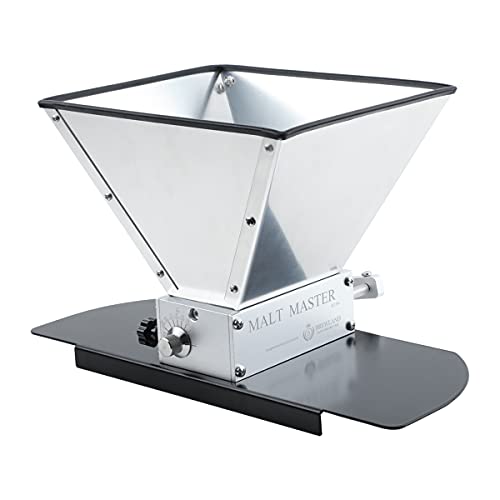
Brewland 2 Roller Grain Mill with Hopper
Adjustable two roller malt mill, which lets you crush your own grain and control efficiency directly.

TIZZE Hop Spider (300 micron)
Stainless mesh basket that keeps hop matter out of the wort, which makes transfer far cleaner.
Related on BrewGearCalc
- All-in-one vs three vessel brewing
- Mash water calculator
- Efficiency calculator
- Grain bill calculator
- Brewing guides
Frequently asked questions
- Is brew in a bag as good as a traditional mash?
- Brew in a bag can produce beer just as good as a traditional mash for a typical five gallon batch. It uses fewer vessels and less cleanup, and many home brewers use it as their only mashing method. Efficiency depends more on crush and technique than on which method holds the grain back from the wort.
- What size kettle do I need for brew in a bag?
- You need a kettle large enough to hold your full mash water and boil volume together, since BIAB does not split the process across vessels. A 10 gallon kettle, such as the MRbrew 10 Gallon Brew Kettle at $138.99, comfortably covers a five gallon finished batch with room for grain and boil-off.
- Do I need a bag, or can I use my all-in-one system's basket?
- Either works the same way in principle. A BIAB bag and an all-in-one system's built-in filter basket both hold grain inside the same vessel used for mashing and boiling, separating it from the wort at the end of the mash. Several all-in-one systems in this catalog use a fitted basket instead of a loose bag for the same purpose.
- Why would I choose a traditional mash tun instead of BIAB?
- A dedicated mash tun, especially an insulated cooler style like the Learn To Brew Igloo Mash Tun, holds mash temperature steady over a long rest without a heat source running underneath it. It also separates the mash and boil into two vessels, which some brewers prefer for larger batches or when running back-to-back batches on the same day.
- Does sparging matter with brew in a bag?
- Many BIAB brewers skip a separate sparge step entirely and mash with their full water volume at once, a common convention rather than a published rule. Some BIAB brewers do a light dunk sparge by dipping the bag briefly in a smaller amount of hot water. Either approach is workable; the key is knowing your process and checking gravity against your target.
- Is a grain mill necessary for either method?
- A mill matters for both. A finer, more consistent crush from a mill like the Ferroday 2 Roller Stainless Grain Mill at $92.90 improves conversion whether the grain sits in a bag or in a dedicated mash tun. Pre-milled grain from a homebrew shop works too, but milling your own right before brewing gives more control over crush consistency.
Researched from published brewing formulas, manufacturer specifications and verified owner reviews. This is general guidance, not professional advice.