Compare
Glass Carboy vs Plastic Fermenter
For most secondary fermentation and short term ageing, the Fermonster 7 Gallon Wide Mouth Carboy at $47.95 is the better buy than a glass carboy of similar size, because PET plastic will not shatter and its wide mouth makes cleaning and dry hopping far easier than reaching into a narrow glass neck.
Glass still wins on one point: it never scratches and never absorbs odor, so brewers ageing sour or funky beer in the same vessel for a long stretch sometimes prefer it despite the weight and breakage risk.
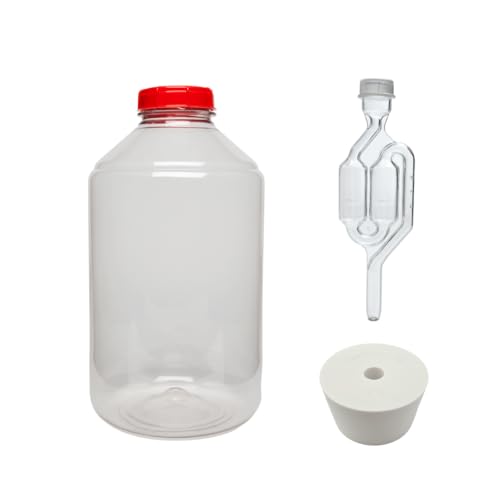
Fermonster 7 Gallon Wide Mouth Carboy
FastRack
Its wide mouth opening makes cleaning, dry hopping and yeast harvesting dramatically easier than any narrow neck glass carboy, while PET plastic removes the single real risk of glass: a dropped, full carboy shattering.
Price last checked at publication and changes often.
Why glass and plastic carboys keep getting compared
Glass carboys were the standard secondary fermenter for decades because glass does not scratch, does not absorb odors from previous batches, and lets a brewer watch fermentation and clarity directly through the wall. Plastic carboys, specifically wide mouth PET vessels, became popular because they weigh far less, cannot shatter, and open wide enough to reach a hand and a scrub brush inside.
Both materials hold beer at the same temperature and support the same yeast. The decision comes down to weight, breakage risk, cleaning access and how long beer sits in the vessel, not fermentation performance.
The real case for glass
Glass is chemically inert and cannot be scratched by a normal brush, which matters most for anyone ageing sour beer, funky beer or anything that sits in the same vessel for a long stretch. A scratch in a plastic vessel is a place for microbes to hide that a normal cleaning and sanitising routine cannot always reach fully. The Italian 6 Gallon Glass Carboy at $69.95 and the North Mountain Supply 6.5 Gallon Glass Carboy at $96.99 are both narrow neck designs built for this kind of long term holding, not for daily handling.
Glass also lets you watch fermentation and clarity through the entire wall of the vessel, not just through a sight tube, which some brewers use to judge when a beer has cleared enough to package.
The real case for plastic
A full 6.5 gallon carboy weighs somewhere around 55 pounds once you account for the beer itself. Glass at that weight, wet, in a kitchen or a basement stairwell, is one of the most commonly described ways homebrewers say they got hurt or lost a batch: a dropped glass carboy shatters, and can cause a serious cut on top of losing the beer. Wide mouth PET vessels like the Fermonster line do not shatter, and the wide mouth opening means you can actually get a hand and a brush inside to clean, instead of relying on a bottle brush and blind faith.
PET does scratch more easily than glass, and a scratched fermenter should be retired from long term holding once the scratches are deep enough to catch a fingernail. For a beer that spends only a few weeks in the vessel before packaging, this is rarely a real problem in practice.
Headspace and sizing across both materials
The same headspace rule applies to a carboy of either material: size for roughly 6.5 gallons to ferment a five gallon batch, with the Fermonster 3 Gallon reserved for small batches or as a secondary vessel after primary fermentation has already knocked down the volume some. Filling a narrow neck glass carboy too full is a particular problem, since krausen pushed up a narrow neck can cake onto the glass and dry hard enough that it takes real scrubbing to remove.
Cleaning a wide mouth vessel versus a narrow neck
A wide mouth PET carboy opens wide enough to fit a hand, a cloth and a brush directly inside, which makes physically wiping down the interior possible in a way a narrow neck glass carboy simply does not allow. A narrow neck relies on a long, thin carboy brush reaching every surface by feel, and a stubborn krausen ring near the shoulder of a glass carboy can take real scrubbing time to remove with a brush alone.
This matters more than it sounds for dry hopping specifically. Adding hop pellets or hop pucks through a narrow glass neck without spilling takes a steady hand and often a funnel; a wide mouth opening lets you drop hops in directly and reach back in afterward if anything needs adjusting.
Long term reuse and how each material ages
A glass carboy that survives being dropped even once is usually done for good, since a crack or chip in glass rarely stays cosmetic; it is a vessel you retire immediately rather than one you can inspect and keep using. A PET carboy that takes a hard knock might scuff or dent slightly but typically keeps holding beer safely, and the real end-of-life signal for plastic is scratching deep enough to catch a fingernail, which happens gradually over years rather than all at once.
That gradual wear pattern is part of why many brewers who start with glass eventually add a plastic vessel to the rotation: not because glass failed them, but because a spare, lightweight, unbreakable carboy is genuinely useful to have around once you are running more than one batch through fermentation at a time.
Failure modes: a crack versus a scratch
A glass carboy's failure mode is sudden and total: a crack from a knock against a doorframe, a countertop edge, or a fall from even a modest height can shatter the vessel outright, sometimes while it is full and at its heaviest. There is rarely a warning sign beforehand, no visible weakness to inspect for; glass either survives an impact intact or it does not. That unpredictability, more than the weight itself, is why so many brewers who have broken one glass carboy switch to plastic afterward.
A PET carboy's failure mode is gradual and visible: scratches accumulate slowly across many cleanings, and you can actually inspect for them by holding the vessel up to a light and running a fingernail across the interior. A scratch you can feel with a fingernail is the signal to stop using that vessel for anything you plan to age for a long stretch, since the scratch itself is a microscopic hiding spot for microbes that sanitiser cannot always reach completely.
The full cost of owning a carboy, not just buying one
Buying a carboy is the smallest cost most brewers will pay for it over its life. Storage matters too: a 6.5 gallon carboy, glass or plastic, needs a shelf or floor space tall enough to stand it upright, plus enough clearance to lift it on and off that shelf safely, which is a real constraint in a small apartment or a shared garage. Glass carboys are also usually stored with extra care, sometimes in a padded stand or a dedicated corner away from foot traffic, simply because the consequence of a bump is so much higher.
Cleaning time is the other ongoing cost. A narrow neck glass carboy generally takes longer to clean well than a wide mouth plastic one, since a carboy brush working blind through a narrow opening covers less surface per pass than a hand and cloth reaching directly inside. Multiply that extra scrubbing time by every batch over a few years of brewing, and the wide mouth design earns back real time even before counting the weight and breakage differences.
What the choice locks you into later
A narrow neck glass carboy also limits what you can put inside it after the fact. Adding a large volume of fruit, oak cubes, or other bulky adjuncts through a narrow neck is awkward at best and sometimes impossible without a funnel built for the purpose. A wide mouth plastic vessel accepts bulky additions directly, which matters for anyone planning to age beer on fruit or wood down the line rather than just deciding everything on brew day.
How we chose
These picks reflect published capacities and materials for each vessel, plus recurring points in verified owner reviews about breakage, scratching and cleaning, not side by side testing of every carboy.
Glass vs plastic carboys compared
| Carboy | Capacity | Material | Price |
|---|---|---|---|
| North Mountain Supply 6 Gallon Glass Carboy | 6 gal | Glass | $67.93 |
| Italian 6 Gallon Glass Carboy | 6 gal | Glass | $69.95 |
| North Mountain Supply 6.5 Gallon Glass Carboy | 6.5 gal | Glass | $96.99 |
| Fermonster 3 Gallon Wide Mouth Carboy | 3 gal | PET plastic | $36.79 |
| Fermonster 7 Gallon Wide Mouth Carboy | 7 gal | PET plastic | $47.95 |
| Speidel 60L Plastic Fermenter | 15.9 gal | Plastic | $128.99 |
Who should buy which
Choose glass specifically when you want to watch fermentation through the wall, or when a beer is going to sit in the same vessel for a long stretch and odor absorption or scratching genuinely worries you. Choose plastic for essentially everything else: it is lighter, cannot shatter, and its wide mouth makes cleaning genuinely easier for most people, most of the time.
The three tiers
These are three genuinely different builds, not the same product at three prices. Buy the tier that matches how much you already know you will use it.
North Mountain Supply 6 Gallon Glass Carboy
North Mountain Supply
The cheapest true glass carboy in this catalog at $67.93, worth choosing specifically if you want to watch fermentation and clarity through glass rather than PET plastic.
$67.93
View on AmazonNorth Mountain Supply 6.5 Gallon Glass Carboy
North Mountain Supply
Sized closer to the 6.5 gallons of headspace a standard five gallon batch actually wants than the 6 gallon glass carboy, at a modest premium of about $29.
$96.99
View on AmazonSpeidel 60L Plastic Fermenter (15.9 gal)
Speidel
15.9 gallons of plastic capacity at $128.99, for brewers fermenting large batches or several batches at once. A brewer still doing single five gallon batches should not buy this: it is heavier to move even empty and far more vessel than a standard batch needs.
$128.99
View on AmazonEverything else worth considering

Italian 6 Gallon Glass Carboy
Clear glass carboy that lets you watch fermentation, and does not scratch or hold odours the way plastic can.

Fermonster 3 Gallon Wide Mouth Carboy
Three gallon wide mouth PET fermenter for small or split batches.
Before you do this
A full glass carboy is heavy and glass breaks. Lift with both hands, close to your body, never by the neck alone, and consider setting a glass carboy low, on the floor rather than a counter edge, during transfers.
Related on BrewGearCalc
- Hydrometer correction calculator
- Refractometer calculator
- Conical vs bucket fermenter
- More comparisons
- Brewing guides
Frequently asked questions
- Is glass or plastic better for a beer fermenter?
- Both hold beer at the same temperature and support the same yeast, so neither makes better beer on its own. Glass never scratches and never absorbs odor, which matters for long term ageing. Plastic, specifically wide mouth PET, weighs far less and cannot shatter, and its wide opening makes cleaning easier. For a standard beer sitting a few weeks before packaging, plastic is the lower risk, lower effort choice for most brewers.
- Do plastic carboys scratch and does that matter?
- Yes, PET plastic scratches more easily than glass, and a deep scratch that catches a fingernail can hide microbes that normal cleaning and sanitising cannot fully reach. For a beer that spends two to four weeks in the fermenter before packaging, light scratching rarely causes a real problem. Retire a heavily scratched vessel from long term ageing duty and use it for short primary fermentation instead.
- How much does a full glass carboy weigh?
- A 6.5 gallon glass carboy filled with beer weighs somewhere around 55 pounds, on top of the empty vessel's own weight. That combination of weight and glass is why a dropped, full carboy is one of the most commonly reported ways homebrewers describe getting hurt or losing a batch. Always lift a full glass carboy with both hands, close to your body, never by the neck alone.
- Can I see fermentation through a plastic carboy?
- Only partially. Wide mouth PET plastic used in vessels like the Fermonster line is clear enough to see krausen activity and general fermentation progress, though it does not have the same optical clarity as glass. For judging exact clarity before packaging, a sample pulled into a glass hydrometer test jar gives a more reliable look than staring through either vessel wall.
- What size carboy do I need for a five gallon batch?
- Plan for roughly 6.5 gallons of capacity to ferment a standard five gallon batch, in either glass or plastic. That extra headspace gives krausen room to rise without pushing beer or foam up the neck and into the airlock. A smaller 3 gallon vessel works for small batches or as a secondary vessel once primary fermentation has already reduced the volume somewhat.
- How long can beer safely sit in a carboy?
- Most ales are ready to package within two to four weeks of fermentation starting, and either a glass or plastic carboy handles that timeline fine. Longer ageing, for example on a sour or barrel character beer, is where glass's resistance to scratching and odor absorption becomes a genuine advantage over plastic, since the vessel is doing duty for a much longer stretch.
Researched from published brewing formulas, manufacturer specifications and verified owner reviews. This is general guidance, not professional advice.