Compare
Immersion vs Plate Chiller
An immersion chiller is the better choice for most home brewers, since it is simple to clean and a brewer can see directly that every coil surface is clean, while a plate chiller is a sealed internal stack that is genuinely harder to verify clean between batches.
A plate chiller such as the Ferroday 60 Plate Wort Chiller at $62.95 chills faster in a single pass and suits a brewer who has a reliable cleaning routine already worked out and wants to shorten chill time.

Coldbreak 25 Foot Immersion Wort Chiller
Coldbreak
At $99.99, the Coldbreak 25 Foot Immersion Wort Chiller is a simple open coil that a brewer can visually inspect and clean completely, removing the guesswork that comes with a sealed plate chiller.
Price last checked at publication and changes often.
How each chiller actually works
An immersion chiller is a coil of copper or stainless tubing that sits directly in the hot wort. Cold water runs through the coil while wort surrounds it on the outside, transferring heat out through the tubing wall. The whole coil is exposed and visible, so a brewer lowers it directly into the kettle at the end of the boil and lifts it back out when the wort has cooled.
A plate chiller works differently. Hot wort and cold water flow through alternating thin channels stacked inside a sealed metal housing, transferring heat across the plates between them without the wort and cooling water ever mixing. Wort flows through the unit rather than the unit sitting in the wort, which is why a plate chiller is usually installed as an in-line step between the kettle and the fermenter.
Cleaning is the real difference
This is where the two designs genuinely diverge. An immersion chiller is a single open coil with nothing hidden: a brewer can rinse it, scrub it and visually confirm every inch of tubing that touched wort is clean before the next brew day. There is no interior chamber to wonder about.
A plate chiller is a sealed stack of narrow channels that wort has passed through, and those channels cannot be inspected by eye. Cleaning typically means circulating a cleaner like PBW through the unit and trusting that it reached every channel, since there is no way to open the housing and look. That makes a plate chiller genuinely harder to verify clean than an immersion chiller, not just different to clean. A brewer who is not disciplined about a full cleaning cycle after every single use is taking on more risk of infection with a plate chiller than with an immersion coil.
How the two compare
| Type | Example product | Price | Cleaning |
|---|---|---|---|
| Immersion | Coldbreak 25 Foot Immersion Wort Chiller | $99.99 | Open coil, fully visible and verifiable |
| Immersion | Coldbreak 60 Foot XL Wort Chiller (9 to 12 gal) | $184.12 | Open coil, fully visible and verifiable |
| Plate | Ferroday 20 Plate Wort Chiller | $43.90 | Sealed internal channels, not visible |
| Plate | Ferroday 60 Plate Wort Chiller | $62.95 | Sealed internal channels, not visible |
Chill speed and price
A plate chiller genuinely chills faster in a single pass, since wort flows continuously across a large surface area of thin plates rather than sitting in a kettle around a coil. That speed advantage is real and published across plate chiller designs generally, not specific to one brand.
Price does not clearly favor one type over the other in this catalog. The Ferroday 20 Plate Wort Chiller at $43.90 is cheaper than the Coldbreak 25 Foot Immersion Chiller at $99.99, while the Coldbreak 60 Foot XL Immersion Chiller at $184.12 costs more than the Ferroday 60 Plate Wort Chiller at $62.95. A brewer choosing on price alone should compare the specific listings rather than assume either category is reliably cheaper.
- Choose immersion if verified cleanliness matters more to you than chill speed.
- Choose plate if you already have a strict cleaning routine and want a faster chill.
- Compare specific listings on price; neither category is reliably cheaper here.
How each one actually gets used on brew day
An immersion chiller drops directly into the boiling wort for the last few minutes of the boil, which sanitizes the coil in place using the boil itself, then stays in the kettle as cold water runs through it until the wort reaches pitching temperature. Some brewers stir the wort gently or whirlpool it while the coil works, which speeds cooling by moving fresh hot wort past the coil surface instead of letting a static layer form around it.
A plate chiller sits outside the kettle, connected by hose on the wort side and a water supply on the cooling side, with wort pumped or gravity-fed through it into the fermenter. Because the plate chiller is not sanitized by sitting in the boil the way an immersion coil is, it needs its own sanitizing step, typically running hot wort or a sanitizer through it, before the first wort passes through on its way to the fermenter.
Water use and setup complexity
Both chiller types need a supply of cold water, and neither this site nor the manufacturers publish a fixed volume that applies to every brew day, since it depends on groundwater temperature, batch size and how long chilling takes. An immersion chiller's setup is simpler: garden hose in, drain hose out, coil in the kettle. A plate chiller typically needs a pump on the wort side to push hot wort through the unit and into the fermenter, which is one more piece of equipment, one more thing to sanitize and one more possible point of leakage to check before starting.
Material and durability differences
Immersion chillers in this catalog are built from coiled copper or stainless tubing, both of which are simple, well understood materials with no hidden wear points beyond the tubing itself and the fittings at each end. Plate chillers pack many thin metal plates into a compact housing, which makes them more efficient per unit of size but also introduces more surfaces where mineral scale or protein buildup from wort can accumulate over repeated uses if cleaning is inconsistent.
Neither design is fragile under normal home brewing use, and both hold up over years of regular batches when cleaned properly after each one. The practical durability question is less about the metal wearing out and more about whether residue is allowed to build up inside a plate chiller's channels over time, since that buildup is the main way a plate chiller's performance and safety degrade with age.
The trade that actually decides this comparison
Strip away price and speed and the comparison comes down to one trade: a plate chiller is a sealed stack of narrow internal channels that a brewer cannot open and look inside, so verifying it is genuinely clean after use relies entirely on trusting that a cleaning solution reached every channel, not on seeing it. An immersion chiller is a single open coil a brewer can hold up to the light, rinse and confirm clean by eye before it ever touches another batch of wort. That difference in verifiability, not the chill time itself, is the real reason this site leans toward immersion as the safer default recommendation for most home brewers, even though the plate chiller's faster single pass chilling is a genuine and valuable advantage for a brewer who has a disciplined cleaning routine already in place.
Storage and where each one lives between batches
An immersion chiller coils down small enough to hang on a hook or sit in a bucket in a closet, and its open design means it dries out fully with nothing trapped inside to grow anything between uses. A plate chiller is more compact on a shelf, but because its internal channels do not drain completely on their own, it needs to be flushed clean and ideally stored with a sanitizer solution or thoroughly dried before its next use, which is one more step a brewer needs to remember to build into their post-brew-day routine.
How we chose
The design differences and the cleaning contrast between immersion and plate chillers here reflect how each design physically works, not a lab comparison this site ran. Prices come directly from the catalog listings referenced above.
The three tiers
These are three genuinely different builds, not the same product at three prices. Buy the tier that matches how much you already know you will use it.
Craft A Brew Clover Immersion Chiller
Craft A Brew
At $95.99, the Craft A Brew Clover Immersion Chiller is a simple open coil that is easy to learn on and easy to confirm clean before every batch.
$95.99
View on AmazonColdbreak 50 Foot Immersion Wort Chiller
Coldbreak
At $149.99, the Coldbreak 50 Foot Immersion Wort Chiller adds more coil length for faster cooling than a shorter coil, while staying an open, fully cleanable design.
$149.99
View on AmazonColdbreak 60 Foot XL Wort Chiller (9 to 12 gal)
Coldbreak
At $184.12, the Coldbreak 60 Foot XL is sized for larger 9 to 12 gallon batches. A brewer chilling a standard five gallon batch does not need this much coil length and should not pay for the extra capacity.
$184.12
View on AmazonEverything else worth considering

Northern Brewer Copperhead Immersion Wort Chiller
Copper immersion coil that drops into the kettle at flameout to bring wort down to pitching temperature.

Ferroday 20 Plate Wort Chiller
Compact brazed plate exchanger, the cheapest way into counterflow chilling.
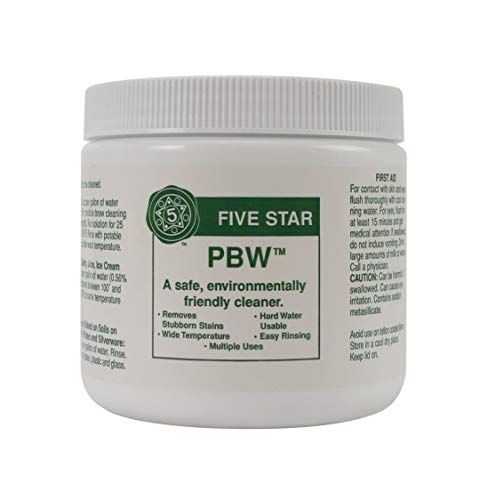
Five Star PBW (1 lb)
Non-caustic alkaline brewery wash that lifts baked-on trub without scrubbing. It is still an alkaline cleaner and needs gloves and eye protection.
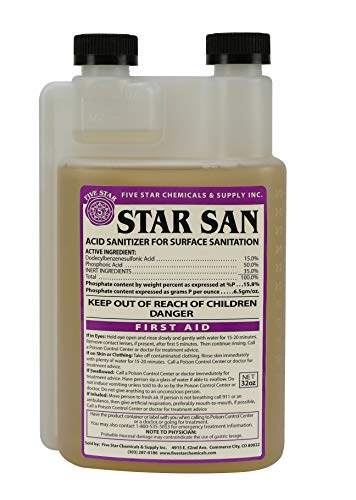
Five Star Star San (32 oz)
High foaming no-rinse acid sanitiser. One ounce treats five gallons, so a single bottle lasts most brewers a very long time.
Related on BrewGearCalc
- Brew in a bag vs a traditional mash
- Boil-off calculator
- Yeast pitch calculator
- Equipment reviews
- Equipment specs
Frequently asked questions
- Which is easier to clean, an immersion chiller or a plate chiller?
- An immersion chiller is easier to clean because it is a single open coil that a brewer can see and scrub directly, confirming it is clean before the next batch. A plate chiller is a sealed stack of internal channels that cannot be visually inspected, so cleaning relies on circulating a cleaner through it and trusting it reached every surface.
- Does a plate chiller cool wort faster than an immersion chiller?
- Yes, a plate chiller generally chills faster in a single pass because wort flows continuously across a large surface area of thin plates rather than sitting around a coil in the kettle. That speed comes at the cost of a sealed design that is harder to verify clean between uses.
- Is a plate chiller more likely to cause an infection than an immersion chiller?
- It carries more risk if cleaning is inconsistent, since its sealed channels cannot be inspected by eye the way an open immersion coil can. A brewer with a strict, repeatable cleaning routine after every use can manage that risk well; a brewer who sometimes skips a full clean is safer with an immersion chiller.
- Which chiller is cheaper, immersion or plate?
- It depends on the specific listing rather than the category. In this catalog the Ferroday 20 Plate Wort Chiller at $43.90 is cheaper than the Coldbreak 25 Foot Immersion Chiller at $99.99, but the Coldbreak 60 Foot XL Immersion Chiller at $184.12 costs more than the Ferroday 60 Plate Wort Chiller at $62.95.
- Can I use an immersion chiller with an all-in-one electric system?
- Yes. An immersion chiller simply lowers into the kettle at the end of the boil, which works the same whether the kettle is a standalone pot or the vessel on an all-in-one electric system. Just confirm the coil fits inside your specific kettle's diameter and depth before buying, since a coil that is too wide will not sit flat against the bottom.
- How long should I run a chiller before pitching yeast?
- This depends on your target pitching temperature, your groundwater temperature and your specific chiller, so this site will not state one fixed time that fits every setup. Check wort temperature directly with a thermometer as you chill rather than guessing by the clock, and stop once you reach the temperature your yeast strain calls for.
Researched from published brewing formulas, manufacturer specifications and verified owner reviews. This is general guidance, not professional advice.