Guides
Extract vs All-Grain Brewing
Extract brewing replaces the mash with pre-made malt extract, cutting a typical brew day to about 2 to 3 hours against 5 to 6 hours for all-grain, while all-grain trades that extra time for full control over the grain bill and, once you already own a mash tun, a lower per-batch ingredient cost.
The core difference
Malt extract is grain that a maltster has already mashed, converted, and concentrated into a syrup or powder at commercial scale. When you brew with extract, you are skipping the conversion step entirely and starting close to where an all-grain brewer finishes their mash. All-grain brewing does that conversion yourself, mashing crushed raw grain in your own kettle before moving to the boil.
Both paths use the same yeast, the same boil, the same hop schedule logic, and the same fermentation process. The difference lives entirely in how the fermentable sugar gets into your kettle, which is why the two methods can produce very similar finished beer when the recipe is built well on either side.
Brew day time and equipment
An extract brew day skips the mash and sparge steps entirely, so it commonly runs 2 to 3 hours: heat water, dissolve extract, boil for the standard 60 minutes, add hops on schedule, chill, and pitch. An all-grain brew day adds strike water calculation, a 60 minute mash, and sparging before the boil even starts, which typically pushes total time to 5 to 6 hours.
Extract brewers need a kettle, a chiller, a fermenter, and basic measuring tools, the same core gear every brewer eventually owns. All-grain brewers need all of that plus a mash tun sized for their grain bill and water volume, which is the single biggest equipment jump between the two methods.
Ingredient cost, side by side
Ingredient kits are the clearest apples-to-apples comparison, since the same supplier sells both extract and all-grain versions of similar styles. Prices vary by style and grain bill complexity in both directions, so there is no fixed rule that one format is always cheaper. Comparing real kit prices from the current catalog shows the range better than a single average would.
| Kit format | Product | Price |
|---|---|---|
| Extract | Brewer's Best American Cream Ale Ingredient Kit | $46.75 |
| All-grain | My Brew Supply American Wheat All Grain Kit | $41.99 |
| Extract | Brewer's Best Imperial Blonde Ale Ingredient Kit | $48.95 |
| All-grain | Northern Brewer Nut Brown All Grain Kit (5 gal) | $54.99 |
Control over recipe and flavor
All-grain brewing gives full control over every grain in the bill and, critically, over mash temperature, which directly shapes body and how fermentable the wort ends up. Extract brewers work with a fixed sugar profile the maltster chose, though steeping specialty grains alongside extract, a common hybrid approach, lets you add color and some flavor complexity without a full mash.
Modern liquid and dry extracts are consistent and well made, so the flavor gap between the two methods is smaller than brewing folklore sometimes suggests. The bigger practical difference is how much of the recipe design happens in your kettle versus at the maltster.
Efficiency and consistency
Extract wort starts from sugar that is already extracted, so batch-to-batch consistency is high and there is no mash efficiency to measure. All-grain efficiency is a CONVENTION, commonly assumed at 72 to 75 percent, but it depends on your crush, mash technique, and equipment, and it will vary between batches until you dial in your own process.
That variability is not a flaw in all-grain brewing, it is simply the tradeoff for controlling the conversion step yourself. Measuring gravity with a hydrometer or refractometer and comparing it against the efficiency calculator linked below turns that variability into a known number you can plan around.
Partial mash: a middle path
Partial mash brewing sits between the two extremes. A small portion of the grain bill, often specialty grains plus a modest amount of base malt, is mashed in a small pot for actual starch conversion, while the rest of the fermentable sugar still comes from extract. This lets a brewer experiment with mash temperature and a wider grain selection on a small scale before committing to a full mash tun and the water volume that goes with it.
It is a reasonable stepping stone for a brewer who has outgrown simple steeping but is not ready for the equipment and time commitment of a full all-grain brew day. The core mash chemistry, including the standard strike water equation, applies the same way at this smaller scale.
What does not change between the two methods
It is easy to focus on the differences and forget how much of the process is identical either way. Sanitation standards do not relax for extract brewing, an infected batch from dirty equipment tastes the same regardless of how the sugar got into the kettle. Fermentation temperature control, yeast pitching rate, and the length of time you give a batch to finish all matter equally whether the wort came from a mash or a can of extract.
Packaging is also unaffected by the choice. Bottling or kegging procedure, priming sugar calculations, and carbonation targets depend on the beer style and your equipment, not on whether the fermentable sugar started as crushed grain or concentrated syrup. Choosing extract over all-grain, or the reverse, changes roughly the first third of brew day and nothing after that.
Liquid extract versus dry extract
Extract itself comes in two forms, liquid malt extract and dried malt extract, and the choice between them is a separate decision from extract versus all-grain. Liquid extract is a thick syrup that is easier to find in specific style-matched blends, while dried extract is a powder that stores longer without a change in character and is often used to boost gravity in a starter or a late addition without adding much extra liquid volume.
Both forms are simply concentrated, unfermented wort, so the same boiling, hopping, and fermentation steps apply to either one. A recipe built around liquid extract can generally be converted to dried extract with a small adjustment for the water content difference between the two forms, which most recipe software or a homebrew shop can help calculate.
A first extract batch, step by step
A simple extract brew day follows a consistent order: heat a partial or full volume of water, remove from heat or reduce heat before stirring in the extract to avoid scorching it against the bottom of the kettle, bring the wort to a boil, follow the recipe's hop schedule, chill, transfer to a sanitized fermenter, and pitch yeast. Steeped specialty grains, when a recipe calls for them, go in before the extract, steeped in warm water below boiling and removed before the extract and boil begin.
None of these steps require specialized equipment beyond what a beginner kit typically includes, which is part of why extract remains a common entry point even for brewers who plan to move to all-grain eventually.
Which one should you start with
Neither method is strictly better, and plenty of experienced brewers stay with extract long-term because the consistency and shorter brew day fit their schedule. If your priority is fitting a batch into an evening and minimizing equipment, extract is the more direct path. If your priority is full control over the grain bill and you have the time for a longer brew day, all-grain is worth the equipment investment.
A common progression is starting with extract and steeped specialty grains to learn the boil, fermentation, and packaging steps, then moving to partial mash, then adding a full mash tun once those fundamentals feel routine. Either starting point can produce good beer, and there is no rule that says you must eventually graduate to all-grain at all.
Everything else worth considering

Brewer's Best American Cream Ale Ingredient Kit
Complete malt, hop and yeast kit for a five gallon batch, with no recipe design required.

My Brew Supply American Wheat All Grain Kit
All grain wheat recipe kit with pilsner and caramel malt plus Kent Goldings hops.

Brewer's Best Imperial Blonde Ale Ingredient Kit
Higher gravity blonde ale kit, which needs a larger yeast pitch than a standard strength beer.

Northern Brewer Nut Brown All Grain Kit (5 gal)
All grain nut brown ale kit, a forgiving recipe for a first all grain batch.

Brewer's Edge Mash & Boil Series 2 (no pump)
The same programmable all-in-one without the recirculation pump, which is the single cheapest way into all-grain electric brewing.
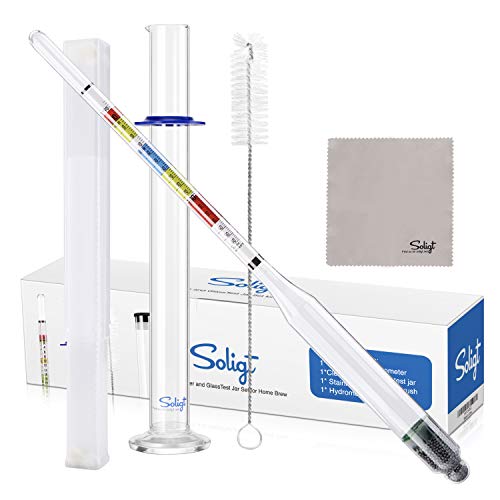
SOLIGT Triple Scale Hydrometer with Glass Test Jar
Hydrometer reading ABV, Brix and specific gravity, supplied with a glass jar.

Ade Advanced Optics Beer Wort Refractometer
Dual scale refractometer reading specific gravity 1.000 to 1.120 and Brix, built for wort rather than fruit.

Coldbreak 25 Foot Immersion Wort Chiller
Twenty five feet of food grade copper tubing, sized for five gallon batches.
Before you do this
Whichever method you brew with, confirm fermentation is actually finished before bottling. A hydrometer reading that holds steady across several days is the only real check, since bottling early or over-priming is how bottle bombs happen.
Related on BrewGearCalc
- How to brew all-grain beer
- Efficiency calculator
- Cost per batch calculator
- A realistic brew day timeline
- No-sparge and full volume mashing
Frequently asked questions
- Is extract beer as good as all-grain?
- Modern malt extract is consistent and well made, and plenty of award-winning homebrew has been made from extract. The flavor gap between the two methods is smaller than it once was. The main practical differences are brew day length and how much control you have over the exact grain bill, not a hard ceiling on quality.
- How much more does all-grain equipment cost upfront?
- The single biggest addition is a mash tun, which can be an insulated cooler conversion on the low end or a purpose-built vessel or all-in-one system on the higher end. Beyond that, all-grain and extract brewers use the same kettle, chiller, fermenter, and measuring tools, so the upfront cost gap is mostly the mash tun itself.
- Can I steep specialty grains with extract?
- Yes, this is a common hybrid approach. Steeping crushed specialty grains in warm water before adding extract lets you add color and some flavor complexity without doing a full starch-converting mash. It does not replace a true mash for base malt sugars, but it closes part of the flavor and control gap between extract and all-grain brewing.
- Does extract brewing take less time?
- Yes, noticeably. Skipping the mash and sparge steps commonly brings an extract brew day down to about 2 to 3 hours, compared with 5 to 6 hours for a typical all-grain batch. The boil, hop schedule, chilling, and pitching steps take the same amount of time either way, the time savings come entirely from skipping conversion.
- Why does my all-grain efficiency vary batch to batch?
- Efficiency depends on crush consistency, mash thickness, sparge technique, and how well your mash tun holds temperature, and small changes in any of those shift the result. The commonly cited 72 to 75 percent range is a convention, not a guarantee. Measuring gravity with a hydrometer or refractometer each batch is the only way to know your real number.
- Should a first-time brewer start with extract or all-grain?
- Either is a reasonable starting point, but extract removes one variable, the mash, while you learn sanitation, fermentation temperature control, and packaging. Many brewers use extract with steeped grains first, then add a mash tun once those fundamentals feel routine. If a longer brew day does not bother you, starting all-grain directly works too.
Researched from published brewing formulas, manufacturer specifications and verified owner reviews. This is general guidance, not professional advice.