Reviews
Inkbird ITC-308 Temperature Controller Review
The Inkbird ITC-308 (itc308) is a $36.00 two-stage plug-in thermostat that switches a refrigerator and a heater from one temperature probe, making it the cheapest genuinely effective way to control fermentation temperature once paired with any spare fridge.

Inkbird ITC-308 Temperature Controller
Inkbird
For $36.00 it turns any spare refrigerator into a full heating-and-cooling fermentation chamber from a single probe, a capability nothing else near this price offers.
Price last checked at publication and changes often.
What this review is and what it is not
Nobody on this site owns the Inkbird ITC-308, and this is not the result of personal hands-on testing. This review is built from the published product specification, the listing details for this exact model, and the pattern found across a large body of verified owner reviews, since the ITC-308 is a widely owned device with years of ownership history to draw on. It says so directly rather than implying a lab measurement process that did not happen.
What a two-stage controller actually does
The ITC-308 is a plug-in thermostat with two outlets and one temperature probe. Plug a refrigerator into the cooling outlet and a heating source, such as a fermentation heating belt, into the heating outlet, tape the probe to your fermenter, and the ITC-308 switches each outlet on and off to hold the fermenter itself at a set temperature, rather than holding the air temperature of the room or the fridge. That distinction matters because fermentation itself generates heat, so the beer inside a fermenter often runs several degrees warmer than the room around it, and a controller reading the fermenter directly accounts for that in a way a household fridge thermostat cannot.
This is a convention worth naming plainly: the practice of taping the probe to the fermenter wall, sometimes under insulation, to approximate the beer temperature rather than the air temperature is a widely used home brewing technique, not a manufacturer specification. It works because it gets closer to the actual fermenting liquid than an air probe would, but it is still an approximation, not a submerged, food-safe direct reading.
Specifications worth checking
The core function across these listings is the same two-stage heating and cooling control from one probe. What changes between them is wattage rating and whether WiFi monitoring or a second sensor is included. Check the wattage rating on whichever listing you buy against the combined draw of your refrigerator and heater; exceeding a controller's rated load is a real electrical safety concern, not a minor spec detail.
| Controller | Tier | Price | Notes |
|---|---|---|---|
| Inkbird ITC-308 | Intermediate | $36.00 | Two-stage, one probe, plug-in outlets |
| Inkbird ITC-308 Two Stage Outlet Thermostat | Intermediate | $35.99 | Rated for 1100W load |
| Inkbird WiFi ITC-308 | Expert | $49.99 | Adds WiFi monitoring |
| Inkbird ITC-608T | Expert | $52.99 | Dual sensor version |
Why this changes finished beer more than most hot-side upgrades
Fermentation temperature is one of the largest single factors in how a finished beer actually tastes, more so than most equipment upgrades on the hot side of brewing such as a nicer kettle or a faster wort chiller. Yeast produces different levels of esters and fusel alcohols depending on how warm or cool it ferments, and a room that swings by several degrees across a day, especially without air conditioning, lets that variability into every batch. A $36.00 controller paired with a spare fridge removes that variable almost entirely for the price of a single grain bill.
That is the accuracy point worth building a purchase decision around: dollar for dollar, a temperature controller and a spare fridge probably improve finished beer more reliably than the next kettle or burner upgrade at a similar price, because it targets the single biggest lever yeast has over flavor.
- The ITC-308 does not include the refrigerator itself. It is a controller for a fridge you already own or find secondhand, which is where most of the total cost savings over a dedicated fermentation chiller comes from.
- A fermentation heating belt, such as the FastRack Fermentation Heating Belt at $18.50, is the typical heating-side companion for cold-season brewing.
Ownership realities: probe placement and outlet load
Verified owner reviews of the ITC-308 consistently point to two setup details that separate a smooth experience from a frustrating one: probe placement and outlet wattage. A probe taped loosely or placed against the fermenter wall without insulation reads closer to room air than to the beer, defeating some of the purpose of the device. And plugging a load that exceeds the controller's rated wattage into either outlet is a genuine risk, not just a performance issue, so checking your specific refrigerator's power draw against the rated capacity on the exact listing you buy is a real step, not an optional one.
Beyond those two setup points, owner reviews describe the ITC-308 as a mature, well-understood device with a long ownership track record in home brewing specifically, which is part of why it remains the default recommendation at this price rather than a newer or unproven alternative.
Who should buy this, and who should not
Buy the ITC-308 if you have, or can find secondhand, a spare refrigerator or chest freezer and want real fermentation temperature control for close to the lowest price this hobby offers. It is one of the best-value single purchases in home brewing precisely because the underlying fridge is often free or cheap and the controller does the rest. Skip it only if you have no fridge to pair it with and no plan to get one, since the controller alone does not chill anything by itself; in that case, budget for the fridge first and treat the controller as the smaller half of the purchase.
Sourcing the fridge that makes this work
Since the ITC-308 does not include a refrigerator, the total cost of a fermentation chamber built around it depends heavily on where that fridge comes from. A secondhand mini fridge or chest freezer picked up for little or nothing keeps the total build close to the controller's own $36.00 price. A brand new fridge purchased specifically for this purpose changes the math considerably and is worth pricing out before assuming this is automatically the cheapest path to temperature control; the controller itself is cheap, but a temperature-controlled fermentation chamber is only as inexpensive as the fridge feeding it.
Interior space matters as much as price when picking that fridge. A fermenter needs to physically fit inside with the lid clear enough to manage an airlock or blow-off tube, and a probe needs a path to reach the fermenter from outside without the door sealing on the wire in a way that breaks the seal. Check a prospective fridge's interior dimensions against your fermenter's height and width before committing to it as the one the ITC-308 will control.
What to verify before every batch
Because the ITC-308 is doing the same job on every batch, it is worth building a short habit around it: check that the probe is still securely taped in its usual spot before pitching yeast, and confirm the fridge and heater are both drawing power within the controller's rated wattage as printed on the exact unit you own. Neither check takes long, and skipping them is how a previously reliable setup produces one inconsistent batch that is hard to diagnose after the fact.
Why probe placement matters more than the number on the dial
Active fermentation is an exothermic process, meaning the yeast itself generates heat as a byproduct of converting sugar to alcohol, so a fermenting batch commonly runs warmer than the room or fridge air around it, sometimes by a meaningful margin during the most vigorous days of fermentation. A controller reading room or fridge air temperature instead of the fermenter itself will let the beer run hotter than intended during that exothermic peak, even while the dial shows a perfectly reasonable target number. Taping the probe directly to the fermenter, ideally under a layer of insulation such as foam or a folded towel, gets the reading closer to the beer itself rather than the air technically surrounding it, which is the entire point of controlling temperature in the first place.
The three tiers
These are three genuinely different builds, not the same product at three prices. Buy the tier that matches how much you already know you will use it.
Inkbird ITC-308 Freezer and Fermentation Thermostat
Inkbird
Marketed specifically as a freezer and fermentation thermostat for $36.99, functionally similar two-stage control if you want a listing framed around this exact use case.
$36.99
View on AmazonInkbird ITC-308 Two Stage Outlet Thermostat (1100W)
Inkbird
The Inkbird ITC-308 Two Stage Outlet Thermostat costs $35.99 and is rated for a 1100W load, worth checking if your refrigerator and heater combined draw more than the base model supports.
$35.99
View on AmazonInkbird WiFi ITC-308 Temperature Controller
Inkbird
The WiFi version adds remote monitoring for $49.99. Skip it if you check on your fermenter in person regularly anyway, since the core two-stage control is identical to the base $36.00 unit and you would be paying purely for the notification feature.
$49.99
View on AmazonEverything else worth considering

Inkbird ITC-608T Dual Sensor Controller
Dual probe controller that can read beer temperature and chamber air temperature separately.
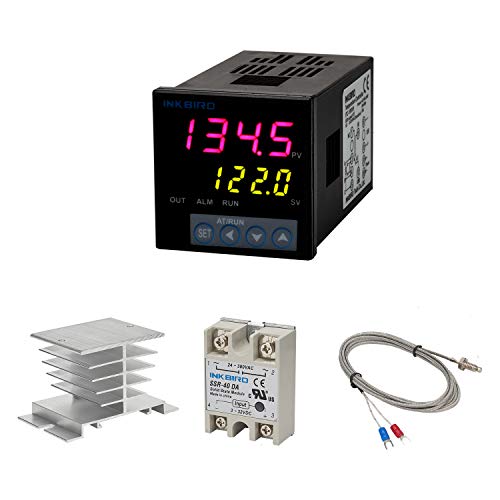
Inkbird PID Temperature Controller Kit
PID controller kit for driving an electric element, used on builds that control mash temperature directly.
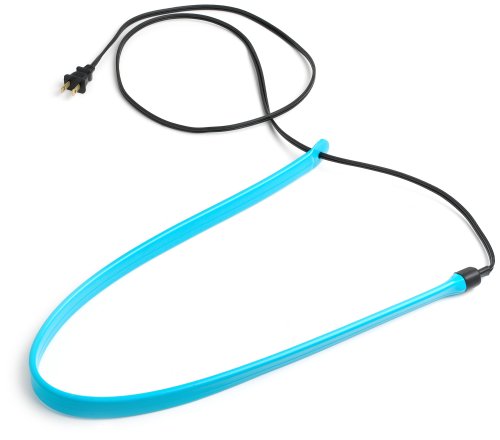
FastRack Fermentation Heating Belt
A wrap-around belt that lifts fermentation temperature in a cold room, the cheapest form of temperature control.

Fermtech Fermentation Heating Belt
Electric warming belt sized for a carboy, jug or bucket.

CDN Waterproof Digital Thermometer (4.75 inch stem)
NSF certified waterproof thermometer with a long stem, which reaches into a mash without soaking the housing.
Before you do this
Check the rated wattage on the exact ITC-308 listing you buy against your refrigerator and heater's combined power draw before plugging either into it. Exceeding a controller's rated load through either outlet is a real electrical hazard, not just a performance concern.
Related on BrewGearCalc
- Best fermentation temperature control
- Fermentation temperature control guide
- Best brewing thermometers
- Cold crashing guide
- Best fermenters
Frequently asked questions
- What does the Inkbird ITC-308 actually control?
- It is a two-stage plug-in thermostat with one temperature probe and two outlets: one for a cooling source such as a refrigerator and one for a heating source such as a fermentation belt. It switches each outlet on and off to hold whatever the probe reads, typically taped to the fermenter, at a set target temperature. It does not chill or heat anything on its own; it controls appliances plugged into it.
- Do I need a fridge to use the Inkbird ITC-308?
- Yes, for the cooling side. The ITC-308 is a controller, not a refrigeration unit, so you need a refrigerator or chest freezer to plug into its cooling outlet. Many home brewers use a secondhand or already-owned spare fridge, which is where most of the cost savings over a dedicated fermentation chiller comes from. The controller alone, without a fridge, only handles the heating side of temperature control.
- How accurate is the Inkbird ITC-308?
- Verified owner reviews describe it as a reliable, widely used controller with a long track record in home brewing specifically, though its accuracy in practice depends heavily on probe placement. A probe taped directly to the fermenter, ideally under some insulation, reads closer to actual beer temperature than one left loose against the fermenter or in open air, which is a setup detail that affects results more than any spec on the unit itself.
- What wattage can the Inkbird ITC-308 handle?
- This varies between the different Inkbird ITC-308 listings, so check the specific rated wattage on the exact product you are buying against your refrigerator and heater's combined power draw before use. The Inkbird ITC-308 Two Stage Outlet Thermostat, for example, is specifically rated for a 1100W load. Exceeding a controller's rated capacity is a genuine electrical safety concern, not just a performance limitation.
- Is the Inkbird ITC-308 worth it compared to a dedicated fermentation chamber?
- For most home brewers, yes. A dedicated fermentation chiller costs significantly more than a $36.00 controller paired with a spare or secondhand refrigerator, and the two-stage heating and cooling control is the same underlying capability. The main tradeoff is that you need to source a fridge separately, which takes some effort but is usually the cheaper overall path to real fermentation temperature control.
Researched from published brewing formulas, manufacturer specifications and verified owner reviews. This is general guidance, not professional advice.